
Key Takeaways
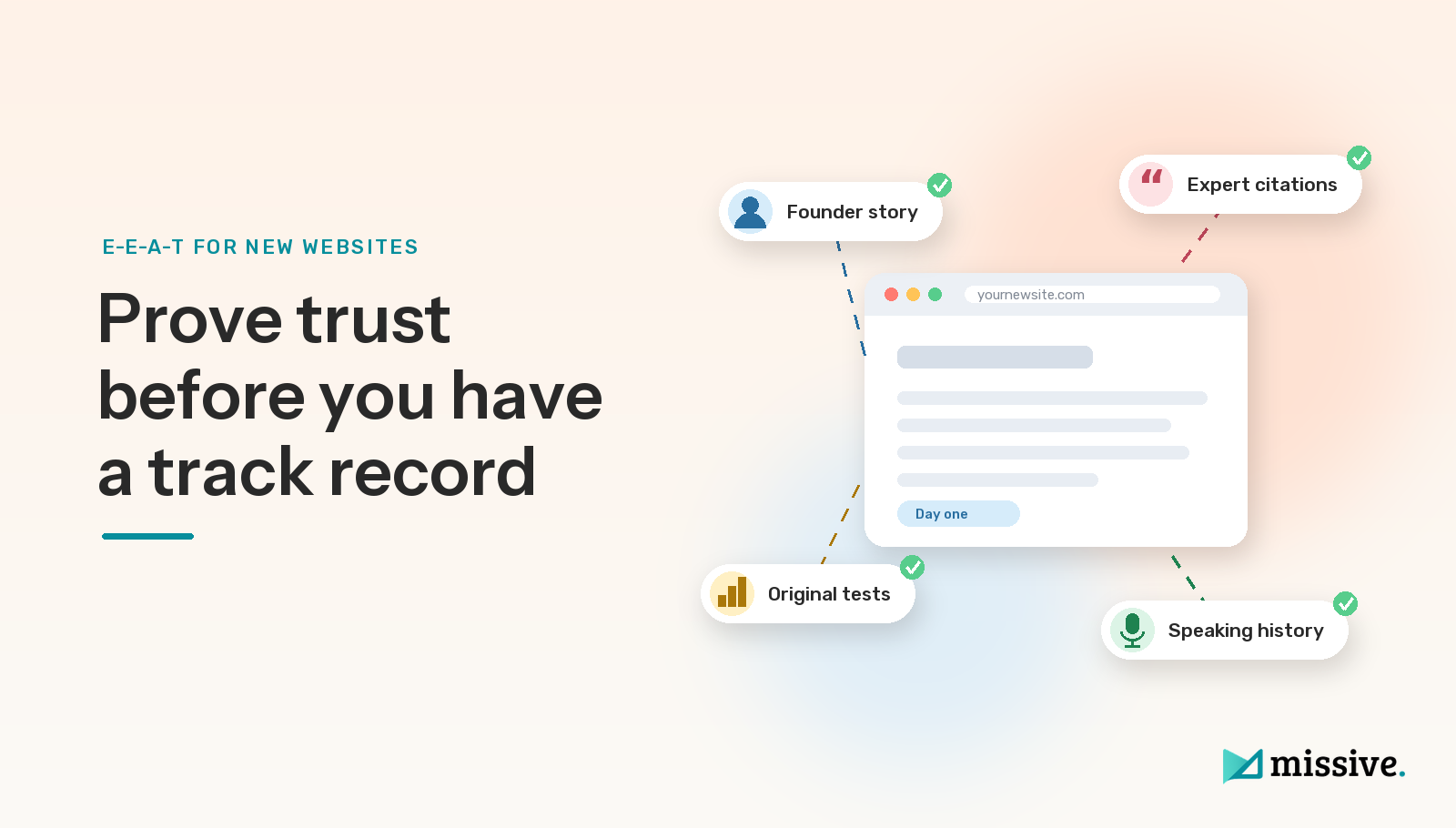
- A new website isn’t disqualified from E-E-A-T. It’s just starting without history as leverage, and that’s a different problem than having none at all.
- Two of the four pillars, Experience and Trustworthiness, are winnable the day your site goes live. Authoritativeness takes time and outside recognition, so don’t try to force it early.
- The real blocker for most teams isn’t a lack of credentials. It’s a founder or leader who doesn’t want their name attached as the subject matter expert, and there’s a workaround for that.
- Borrowing credibility, through citations, interviews, and even community conversations on Reddit or X, is a legitimate bridge while you build your own track record, not a shortcut to avoid.
- AI tools check the same trust signals Google does, just faster, since they have no history with a brand-new domain either. This work pays off for AEO and GEO too.
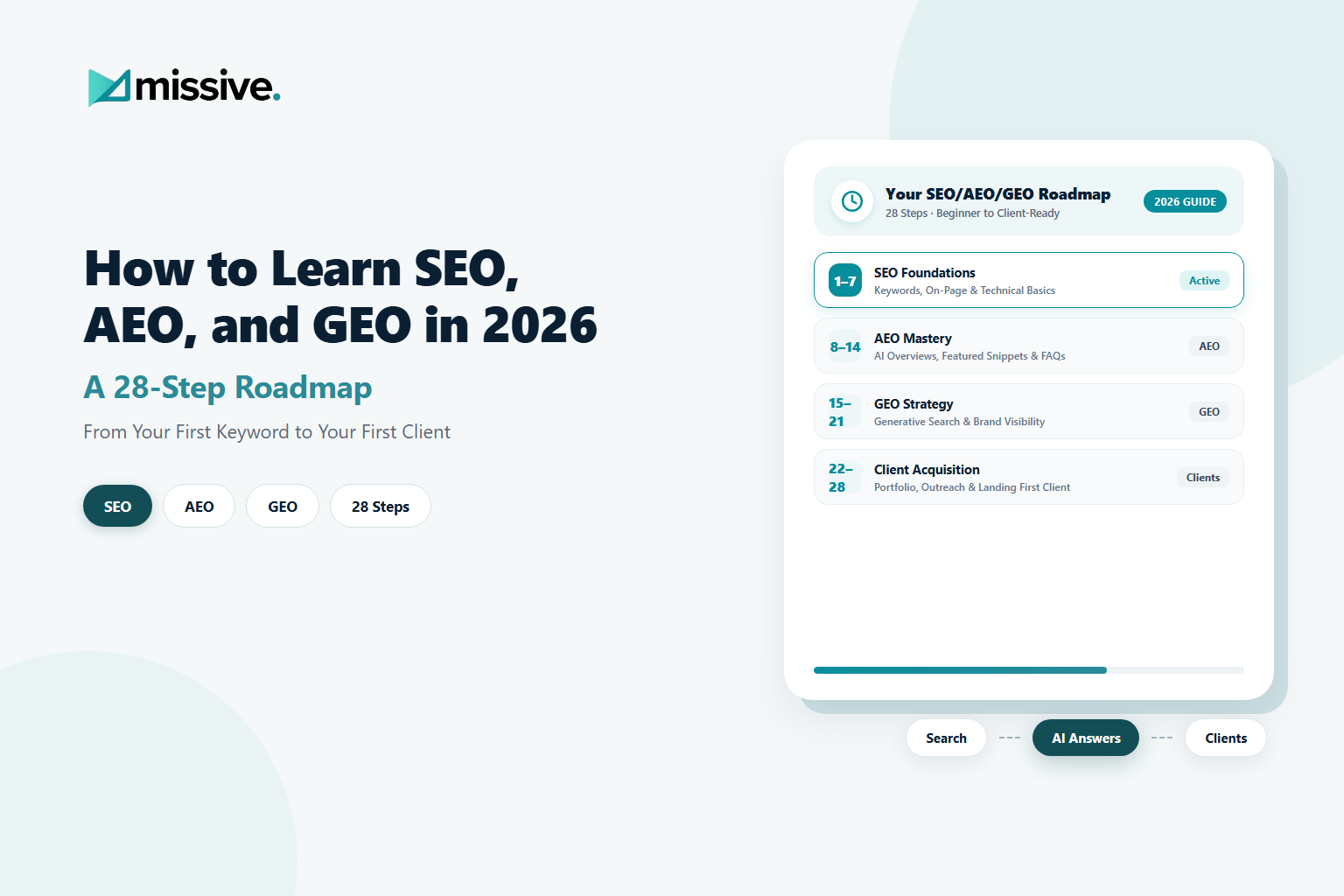
In the 28-step roadmap I wrote for learning SEO, AEO, and GEO in 2026, one of the steps said to use your own screenshots, tests, and data as proof, because that’s what AI can’t generate and what Google now rewards. That advice assumes something, though: a founder or team willing to put their name and face behind that data.
That assumption doesn’t always hold. Every time I speak at an event on E-E-A-T, whether it’s a roomful of founders or a marketing team, the question that comes up most is our founder or leadership doesn’t want to be positioned as the subject matter expert, or we’re too early-stage to have any credentials competitive enough to build trust with viewers. What do we do then?
This post is the answer to that specific question, not another general definition of E-E-A-T you’ve likely already read elsewhere.
What E-E-A-T Actually Means When You Have No Track Record Yet
The Four Pillars, and Which Ones You Can Influence Immediately
E-E-A-T stands for Experience, Expertise, Authoritativeness, and Trustworthiness, the signals Google’s own Search Quality Rater Guidelines use to judge whether content, and the people or brands behind it, deserve to be trusted. Not all four move at the same speed.
Experience and Trustworthiness are winnable on day one. Experience means showing you’ve actually done the thing you’re writing about, which a founder’s story or a single documented test can prove without any history at all. Trustworthiness means your site is accurate, transparent, and safe to use, which is a matter of how you build the site, not how long it’s existed.
Expertise and Authoritativeness take longer, because they depend on recognition from others: credentials, citations, mentions, and the kind of reputation that accumulates over time. Lily Ray, who has written and spoken on E-E-A-T more than almost anyone else in the industry, covers this in her E-E-A-T resources: these two signals compound, they aren’t switched on.

Knowing which two pillars you can move now changes what a brand-new site should spend its first weeks on: proving experience and trust, not chasing authority it hasn’t earned yet.
Why AI Tools Check the Same Signals, Just Faster
ChatGPT, Perplexity, and Gemini face the identical problem Google does with a new domain: no history to lean on. So they lean harder on the same four pillars, pulled from whatever text is available about you, often faster than Google’s own crawlers get to a brand-new site.
That means the work in this post isn’t just classic SEO housekeeping. It’s also what determines whether a new brand gets mentioned the first time someone asks an AI tool about your category, which is the exact GEO problem Stage 5 of the 28-step roadmap covers.
How to Build Trust and Proof Before You've Earned a Track Record
1. Writing Author Bios and About Pages That Prove Something, Not Just State It
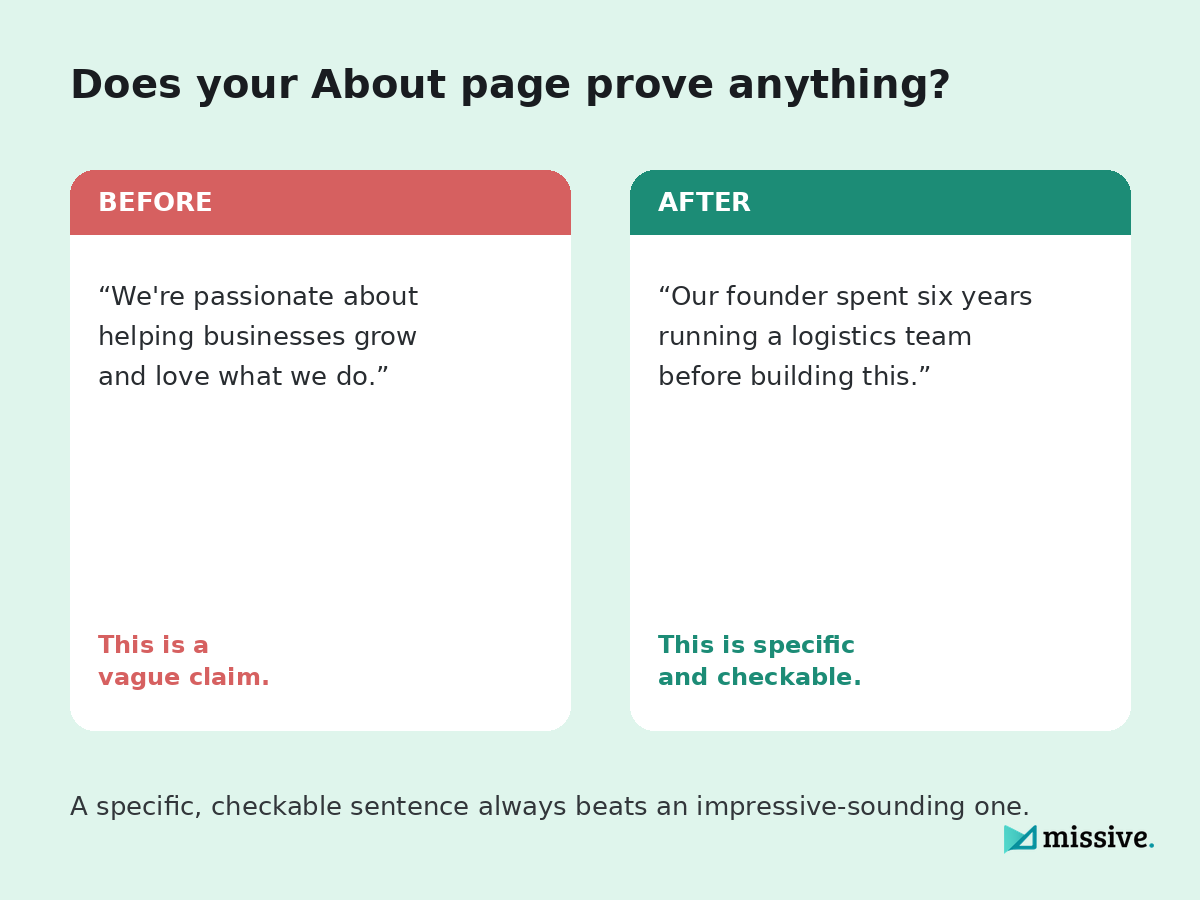
An About page that says “we’re passionate about helping businesses grow” proves nothing. One that says “our founder spent six years running a logistics team before building this” proves experience, because it’s specific and checkable.
If your founder or leadership genuinely won’t be positioned as the named subject matter expert, which is the single most common reason teams tell me they can’t do E-E-A-T, there’s a workaround: use the founder’s origin story instead of a claim to expertise. Why they started the company, what problem they personally ran into, what they tried before this, is Experience, not Expertise, and you don’t need anyone’s permission to claim it, because it’s simply what happened.
Pieter Levels, who has built a public following around his own indie projects, writes almost entirely in this register: what he tried, what failed, and what he learned, rather than credentials he could claim.
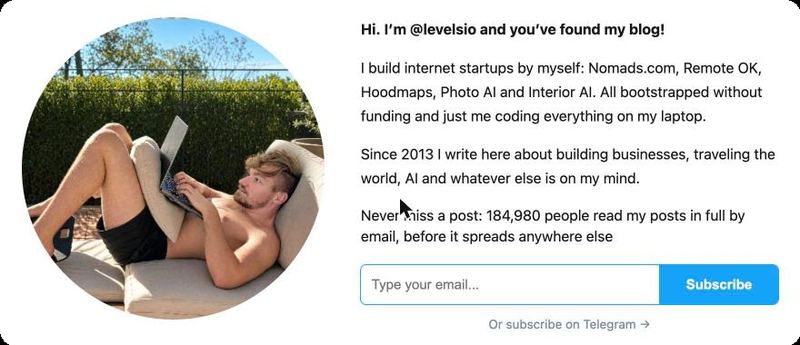
Source: levels.io
2. Citing Primary Sources and Credentialed Experts to Support a Claim You Can't Yet Back Alone
Every link in this post, to Google’s own documentation, to Lily Ray, to a named study, is doing the same job: lending credibility to a claim before the site making it has any authority of its own. A brand-new site can do exactly this.
When you don’t yet have the data or the reputation to support a claim outright, cite someone who does, and link to them. This isn’t padding. It’s how a reader, and an AI tool reading the page, learns the claim is grounded in something real, not invented.
This very post does the same thing: citing Google’s documentation and named experts like Lily Ray throughout is the tactic in action, not just a description of it.
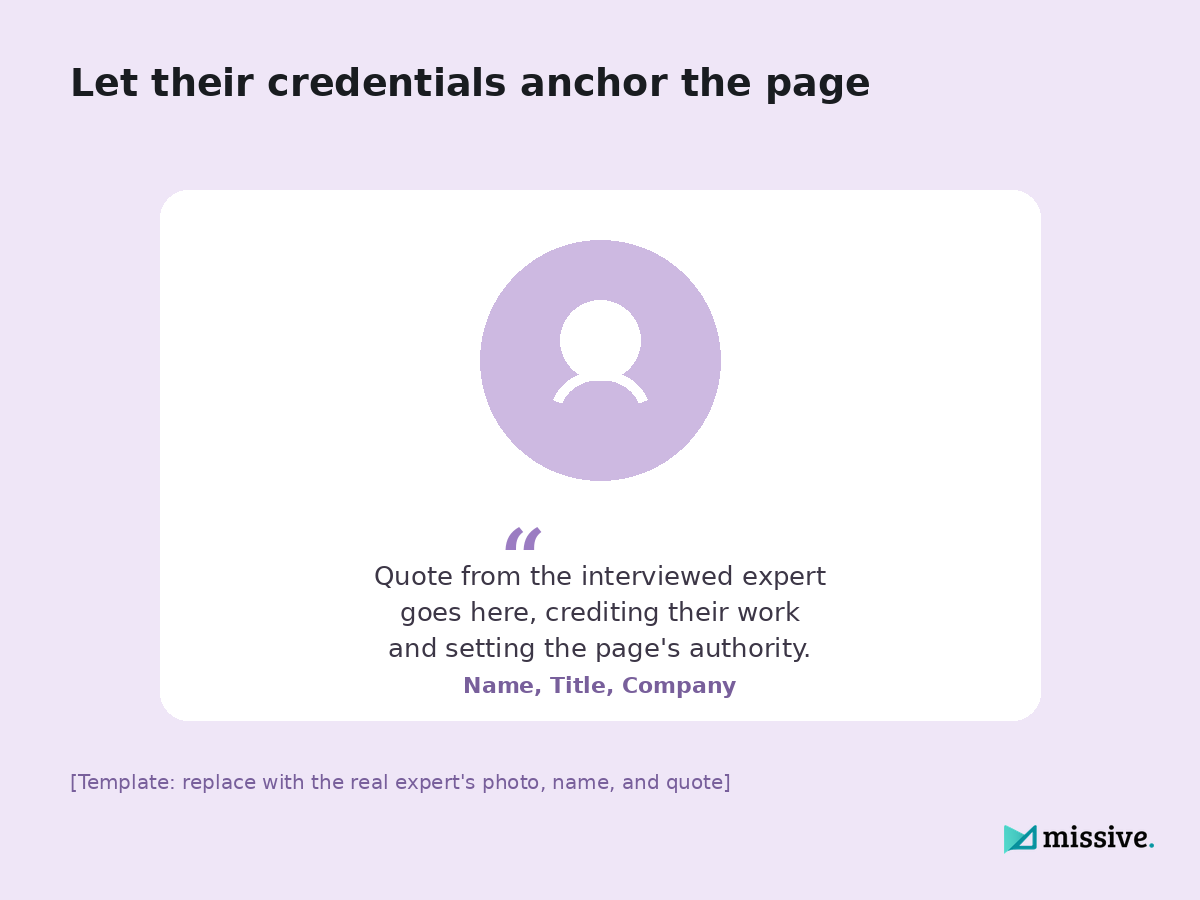
3. Interviewing an Expert and Letting Their Credentials Anchor the Page
A short interview or quoted take from a named, credentialed person does more for a new page’s authority than a paragraph of unsupported claims, because their credentials, not yours, carry the page while you build your own.
Credit them clearly, link to their profile or published work, and let their expertise set the floor the rest of the page builds on.
Diary of a CEO, one of the most-watched interview shows in business media, works on exactly this principle: the guest’s credentials carry the episode before the host says a word. We saw the same principle from both the guest chair and the producer’s seat, which we wrote up in our podcast marketing tips.
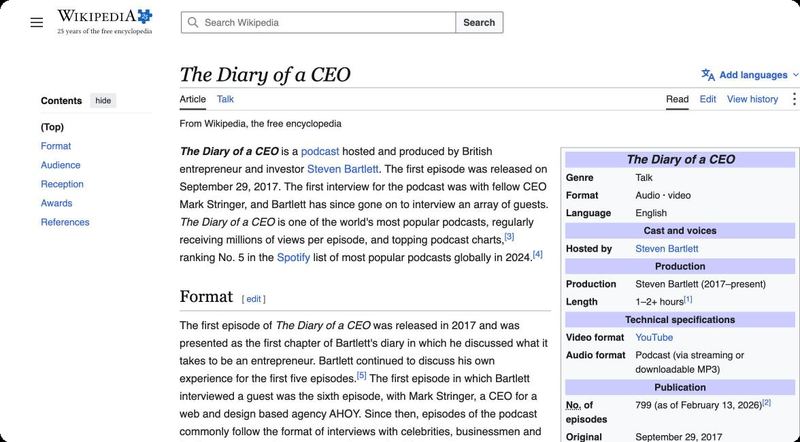
Source: Wikipedia
4. Small Original Tests and Screenshots a Brand-New Site Can Run From Day One
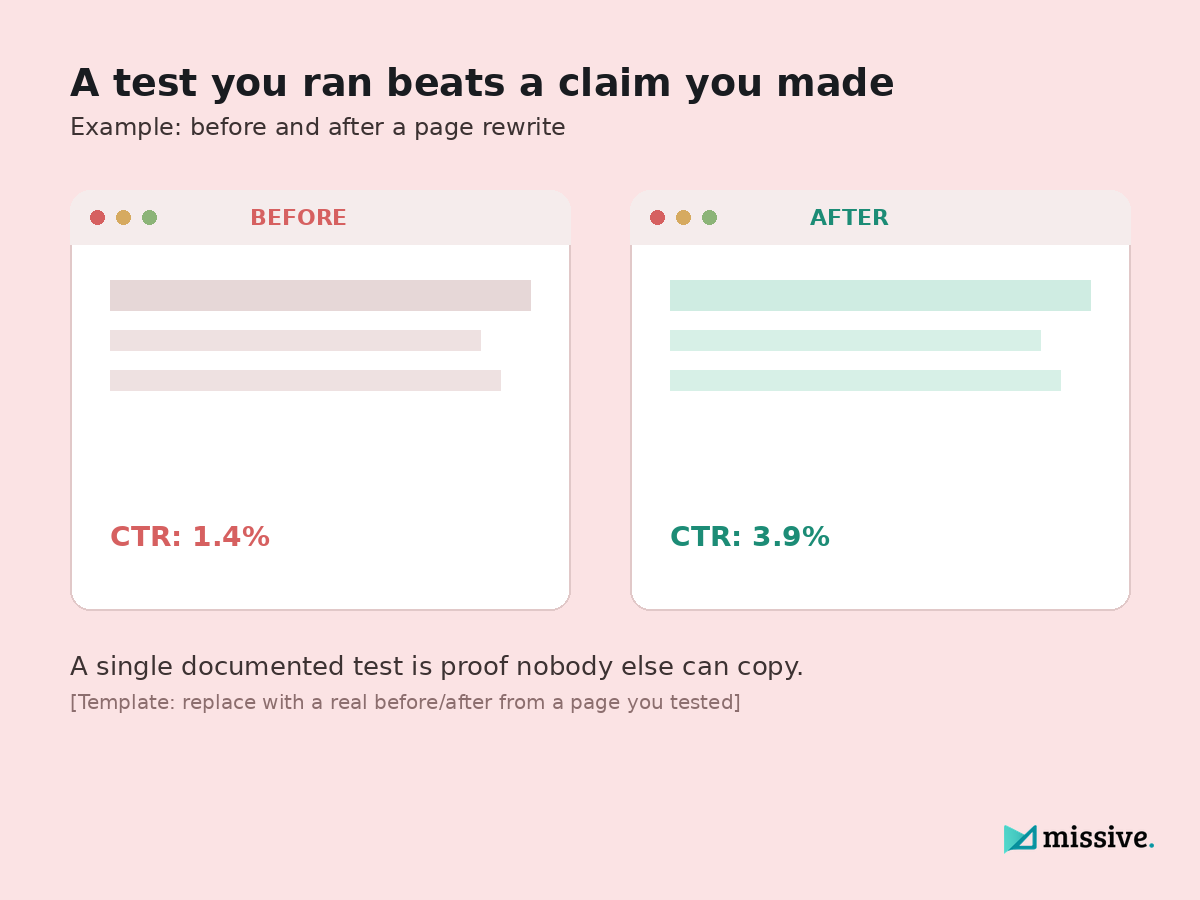
You don’t need months of data to have something original. A single test, run on your own site in week one, a screenshot of a setting you changed and what happened, a before-and-after of a page you rewrote, is proof an AI-written competitor page can’t fake, because nobody else ran your test.
Marie Haynes, who tests and writes about E-E-A-T more than almost anyone else in SEO, built her entire reputation on this: original research and documented experiments, not claims.

Source: mariehaynes.com
5. Founder Credentials, Press Mentions, Reviews, Directory Listings, and Speaking History, Even Without Results Yet
When the website itself has nothing to show, the people behind it often do. Speaking engagements, panels, and session history count as proof on their own, separate from whatever was said inside them: being invited to speak is a signal that someone else, a conference organizer, a university, an industry group, already vetted you enough to put you on a stage.
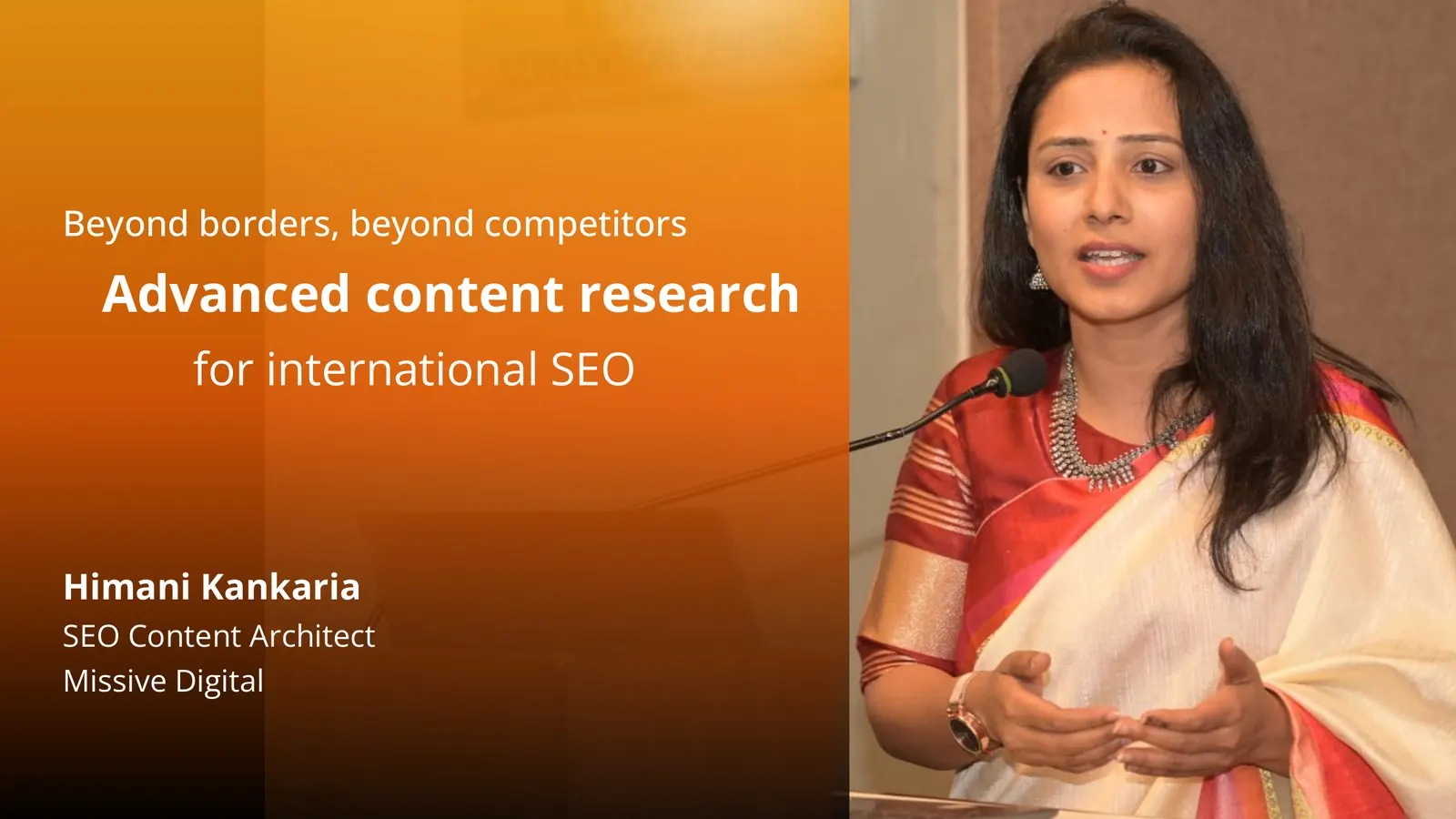
As an example, I’ve spoken on branding for early-stage startups at GUSEC and on marketing strategy at DevFest, to the exact audience this post is written for: founders with no track record yet.
That history belongs on an About or Press page as a credential, independent of the brand’s own site history. The same logic applies to founder credentials, press coverage, customer reviews, and third-party directory listings. None of them require your website to have existed for more than a day.
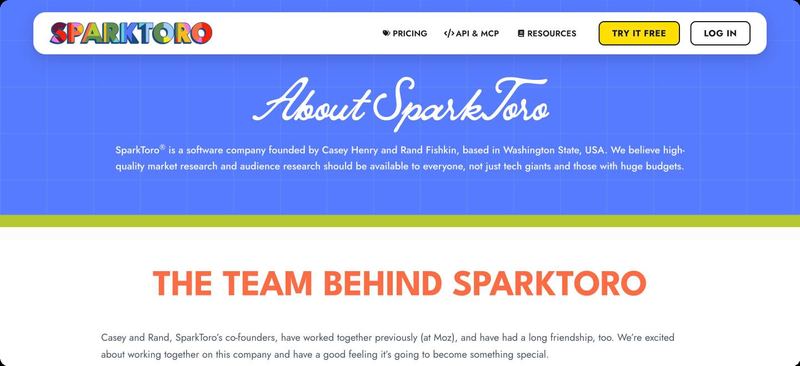
Rand Fishkin lists his founding history at Moz and SparkToro, and his conference speaking record, in nearly everything he publishes. It’s the same move as the GUSEC and DevFest example above: credentials that don’t depend on the current site’s age.
Source: sparktoro.com/about
6. Commenting on a Trend, News Story, or Reddit/X Conversation With Your Own Point of View
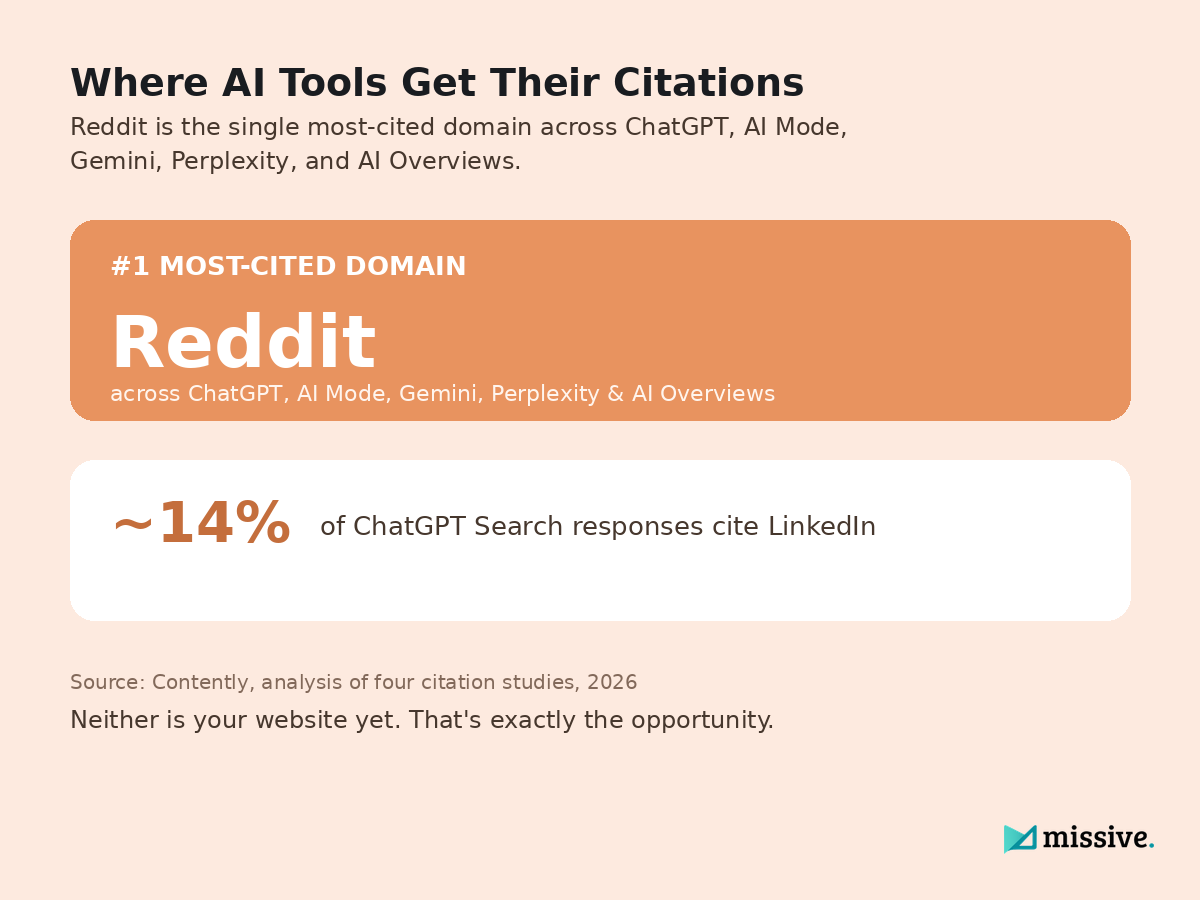
Weighing in on a current trend, a news story in your industry, or a conversation already happening on Reddit or X, with your own take, is a legitimate way to build reputation and visibility fast, especially since Reddit is the single most-cited domain across ChatGPT, Gemini, Perplexity, and AI Overviews.
One caveat worth being clear-eyed about: this kind of thought-leadership content rarely targets a keyword anyone is actually searching for, so it builds AI-tool visibility, social reach, and newsletter engagement, not Google Search traffic. Treat it as a different channel with a different goal, not a replacement for the keyword-driven work in the rest of this post.
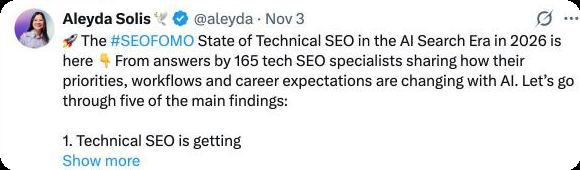
Aleyda Solis, cited earlier in this post, built much of her following by commenting on SEO and Google news on X as it happened, not by waiting for a formal article.
Source: x.com/aleyda
Trust Is Earned in a Specific Order, Not All at Once
A brand-new website doesn’t start at zero on E-E-A-T. It starts by proving the two pillars that don’t require history, Experience and Trustworthiness, while borrowing credibility from others for the two that do. Chase authority you haven’t earned yet, and both Google and AI tools notice the gap faster than a reader would.
If you want a structured way to check whether a page is actually proving what it claims, grab the E-E-A-T Content Validator Checklist, the same framework referenced throughout the 28-step SEO, AEO, and GEO roadmap.
FAQs on E-E-A-T for New Websites
Yes, but only on the two pillars that don't require history: Experience and Trustworthiness. Authoritativeness and Expertise take longer, because they depend on outside recognition that accumulates over time.
Use their origin story instead of a claim to expertise. Why they started the company and what problem they ran into is Experience, which doesn't require anyone to be positioned as an expert.
Yes. ChatGPT, Perplexity, and Gemini check the same four signals, often faster than Google does, because they face the identical problem of having no history with a brand-new domain.
Before. Branding and credibility-building don't require a finished product or results, only a founder willing to start telling the story.