
Your prospects are searching for you online… But they can’t find you…
You’ve done the basics – your Google Business Profile is up, your address and contact info are correct, and maybe you’ve even collected a few reviews or written some blog posts. That’s all good, but here’s the thing: the way people search has changed.
Customers aren’t just typing simple queries like “best bakery in Barcelona.” They’re asking full questions in Spanish, Catalan, or even local dialects, and finding answers in Google AI Overviews or tools like ChatGPT and Perplexity.
Think along the lines of: “¿Dónde puedo encontrar una pastelería con opciones veganas cerca de mí?” or “pastelerías con buen pan artesanal en Poblenou.”
Even if you consider yourself SEO-savvy, traditional methods often miss these new, conversational, hyper-local search patterns. That’s why many businesses partner with an experienced SEO agency that understands how AI-driven search, local intent, and evolving user behavior impact online visibility.
In this guide, we’ll walk you through 7 local SEO mistakes Spanish businesses still make in 2025. So the next time someone searches for what you offer, it’s your business they find first.
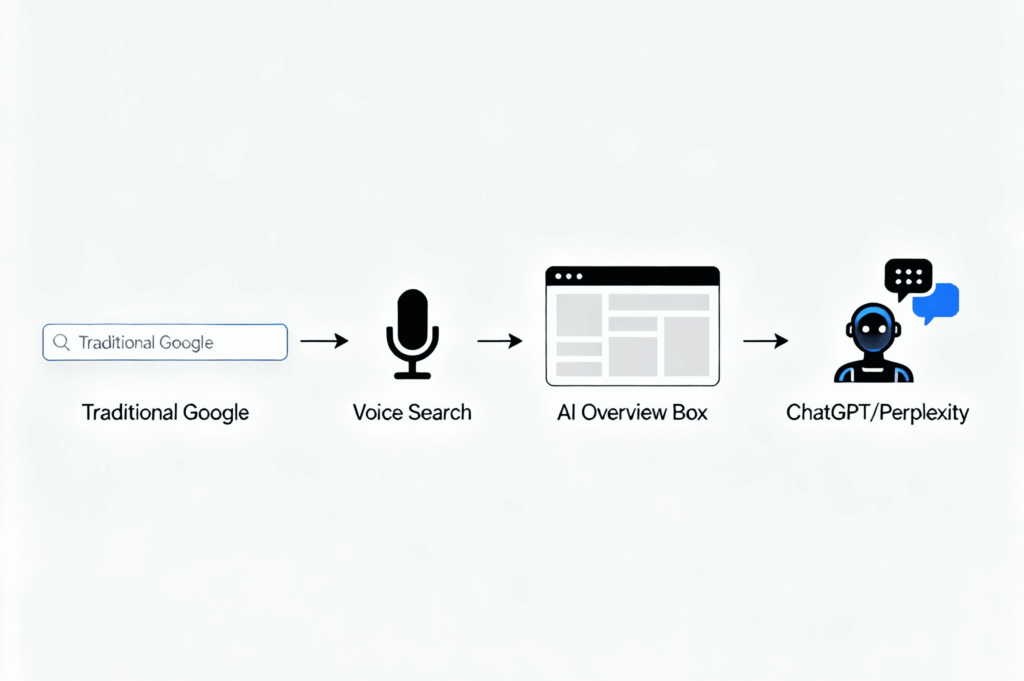
Los 7 principales errores de SEO local que cometen las empresas españolas
Mistake 1: Not Optimizing for AI Overviews in Google
For years, showing up in the local pack (map results) or on the first page of Google was the goal. But things are changing fast: Google has introduced AI Overviews (currently rolling out in Spain too), where instead of a simple list of links, users see a generated summary answer at the top.
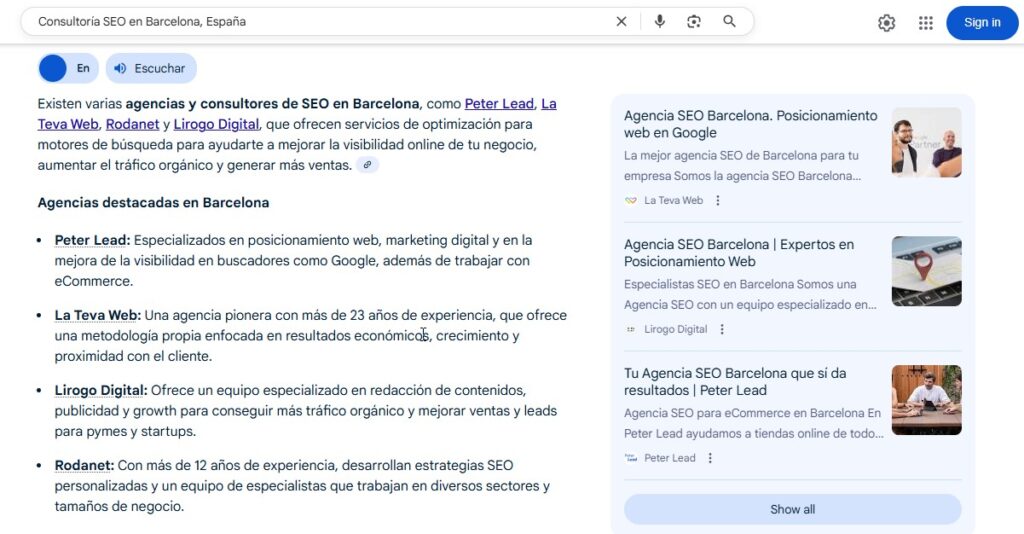
If your business is not mentioned in that AI-generated box, you might lose visibility, even if you already rank well.
For example:
Imagine a tourist searching on Google:
“Restaurantes indios cerca del estadio de fútbol de Barcelona”
In the past:
- The tourist would see a map pack with three restaurants and then some blog articles.
- If your restaurant had good reviews and a strong SEO presence, you had a better chance of showing up.
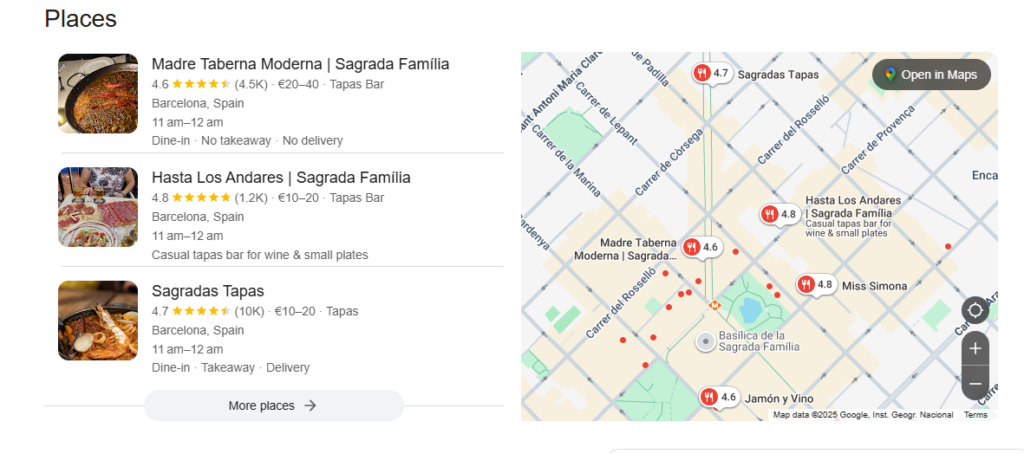
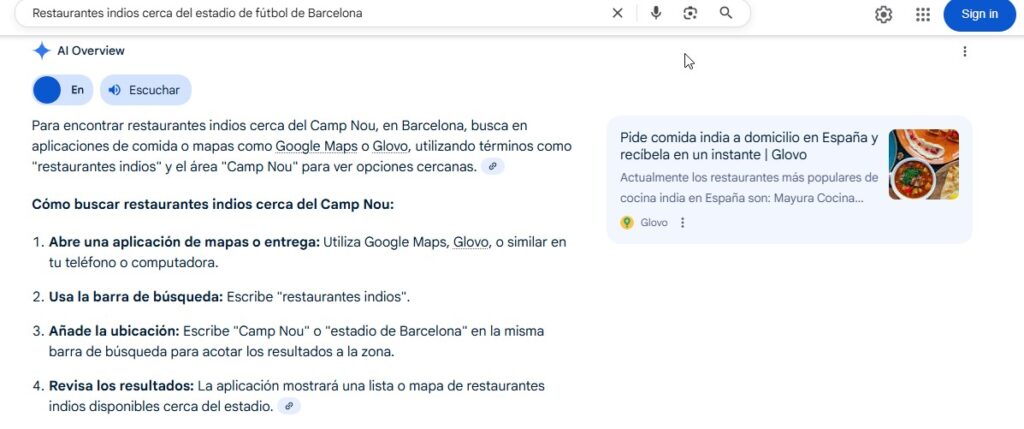
Now with Google AI overviews
- Google’s AI generates a summary box at the top:
“Algunos de los mejores restaurantes de tapas cerca de la Sagrada Familia son X, Y y Z, conocidos por sus platos tradicionales y buenas reseñas. Abren hasta tarde y ofrecen opciones vegetarianas.” - If your restaurant is not mentioned here, the tourist may never scroll down to see your site or even the map pack.
Why does this happen?
- Google’s AI pulls from trusted, structured, and authoritative sources, not just any website.
- If your website content is thin, outdated, or not written in a way that answers real user questions, the AI may ignore you.
- AI Overviews also favor businesses that have consistent local signals (such as updated hours, services, and reviews) and content written in natural, conversational Spanish (or Catalan), matching how people ask questions.
What can you do to come into AIOs?
- Write website content that answers common customer questions directly (e.g., “¿Cuál es el mejor restaurante de tapas en Barcelona abierto hasta tarde?”).
- Keep your Google Business Profile updated with photos, Q&A, and service updates.
Mistake 2: Failing to Adapt to Conversational Queries
Not long ago, people searched robotically:
- “tapas bar Barcelona”
- “fontanero Madrid barato”
- “tienda muebles Valencia”
But today, thanks to voice assistants and AI chatbots (Siri, Alexa, ChatGPT, Google AI Overviews), people search like they talk. These conversational queries are natural, longer, and often in the form of questions.
For Example:
Instead of typing “fontanero Madrid barato”, a user now asks:
“¿Cuál es el fontanero más rápido y económico cerca de mí en Madrid que pueda venir hoy mismo?”
If your website or Google Business Profile doesn’t have content that matches this kind of human-style question, AI and search engines may skip you.
| Aspect | Old-Keyword Search | Modern Conversational Search |
|---|---|---|
| Search Method | Exact Keyword | Natural Language |
| User Intent | Basic, Direct | Complex, Contextual |
| Result Type | Links with Keyword Matches | Direct Answers |
| Personalization | Low | High |
Why does this matter for Spanish businesses?
- Spanish people often search in regional languages or informal styles. For example:
- In Catalonia: “Quin és el lampista més ràpid i econòmic a prop meu a Madrid que pot venir avui?”
- In Andalusia: “¿Cuál es el fontanero más rápido y barato cerca de mí en Madrid que puede venir hoy?”
- AI-powered search looks for direct, clear answers written in the same style people use to ask.
What can you do?
- Add examples and scenarios to your content—AI reads context, not just keywords.
- Write blog posts that mirror how customers ask:
- Don’t: “Servicios de fontanería en Madrid.”
- Do: “¿Qué hacer si se te rompe una tubería en casa en Madrid?”
- Encourage customers to leave detailed reviews that naturally include questions/answers (e.g., “El fontanero vino el mismo día que lo llamé y fue muy económico”).
Mistake 3: Ignoring Regional & Multilingual Search in AI Tools
Spain is not a one-language market. Customers don’t only search in Spanish (Castellano). They also search in other regional languages, such as Catalan, Basque, and Galician, depending on the region. And with Google’s AI Overviews and tools like ChatGPT and Perplexity, the language your customers use makes a huge difference.
The problem: Many businesses only optimize in Spanish. That means that if someone searches in Catalan or Galician, your business might not appear in AI-powered results.
For Example:
- Spanish search: “mejor tienda de ropa en Valencia”
- Catalan search: “millor botiga de roba a València”
If your website only mentions the Spanish version, Google’s AI might ignore you when someone searches in Catalan.
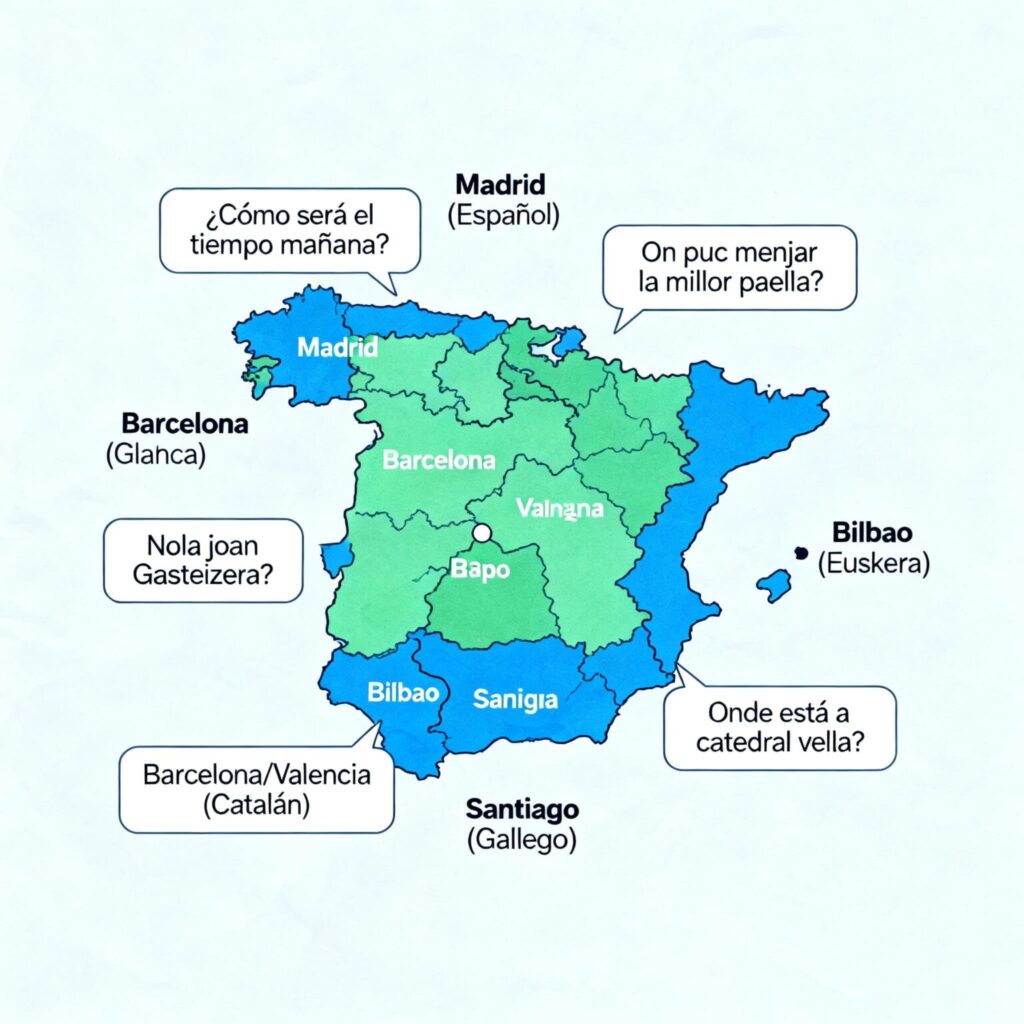
Why does this matter for your business?
- Among Catalan speakers, 55.4% search on the internet in their own language.
- Tourists may search in English, French, or German, especially in Barcelona, Madrid, Valencia, or coastal cities.
- AI tools try to match the language of the query. If your business doesn’t provide signals in that language, you’re invisible.
What can you do?
- Add multilingual content to your website, including at least Spanish and a regional language (such as Catalan, Basque, or Galician) if you target customers speaking these languages.
- Use Google Business Profile descriptions in both Spanish and regional languages.
- For businesses commonly searched by tourists (such as restaurants, hotels, and shops), include short English content as well. AI will recognize it and surface your brand in search results for foreign travelers.
Mistake 4: Not Using Structured Data for Services & Locality
What is structured data?
Structured data is a small piece of code you add to your site that tells search engines very clearly:- What services does your business offer
- Where are you located
- Your opening hours
- Customer reviews
- Prices (if relevant)
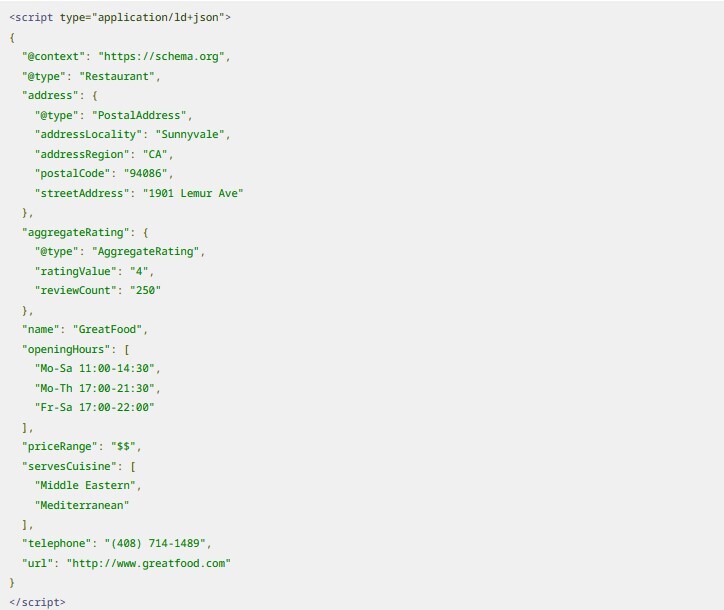
Why does this hurt Spanish businesses?
- Let’s say you’re a “dentista en Valencia”. If your site only has a line saying “Ofrecemos tratamientos dentales en Valencia”, Google’s AI doesn’t always know if you handle implantes dentales, ortodoncia, blanqueamiento, etc.
- Or a “hotel en Málaga”: If structured data doesn’t clearly say “a 5 minutos de la playa”, AI search might recommend a competitor who does.
What happens when you use structured data properly?
- Your services appear in rich results (FAQs).
- AI Overviews are more likely to mention you because they view your business as a clear and trusted source.
- Voice search and chatbots can pull accurate answers (like “¿A qué hora abre la clínica dental en Valencia mañana?”).
- Without schema: “Restaurante de tapas en Madrid, abierto hasta tarde.”
- With schema: Google sees clearly →
- Service: “Restaurante de tapas”
- Location: “Madrid centro, cerca de Atocha”
- Opening hours: “12:00–00:00”
- Speciality: “Tapas tradicionales, opciones vegetarianas”
- Review rating: “4.6/5 (200 reseñas)”
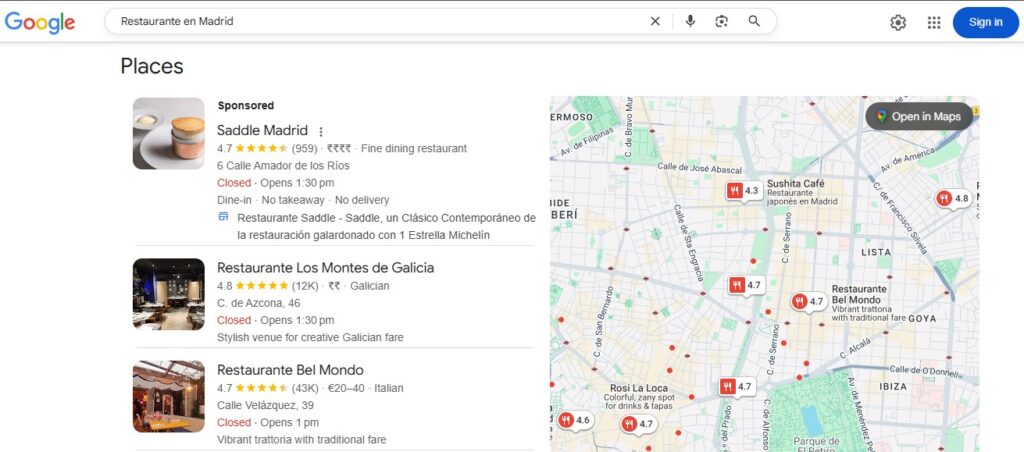
Mistake 5: Weak Entity Building Beyond Google
Up to now, we’ve talked about fundamentals—making your site AI-readable with schema and ensuring your signals are clean. But for more advanced SEOs, there’s another layer: entity building.
Many Spanish businesses today still believe that SEO is limited to Google. They focus on keywords, Google Maps, and reviews. But forget that search engines (and AI tools) consider looking at the broader picture of your brand across the web.
This broader concept is known as entity building.
In simple words, an entity is your business’s identity online, how consistently it appears, what it’s known for, and how it connects with topics, locations, and industries.
Why does it matter for your business today?
- Google, Bing, ChatGPT, and Perplexity don’t just read your website. They check Wikipedia, local directories, social media, news mentions, and trusted blogs.
- If your business only has a website and a Google Business Profile, you look “weak” to AI systems.
- A strong entity (consistent presence across many platforms) increases the chance of being recommended in AI Overviews and conversational answers.
For Example:
Let’s say you own a winery in La Rioja.
- Weak entity: You have a website + Google Maps listing. That’s it.
- Strong entity: You’re listed in Spanish wine directories, mentioned in local news articles, have social profiles with consistent NAP info, appear in Tripadvisor or Yelp, and maybe even have a Wikipedia or Wikidata entry.
When someone searches on AI or a search engine:
“¿Cuál es una bodega familiar en La Rioja que ofrece catas de vino?”
AI systems are more likely to recommend your strong entity winery because of multiple trusted signals confirming its relevance.
What Spanish businesses should do?
- Be present in local and national directories (Páginas Amarillas, Yelp, Tripadvisor, industry-specific directories).
- Keep consistent NAP (Name, Address, Phone) everywhere.
- Get local press coverage or guest features in trusted Spanish blogs.
- Consider Wikidata or Wikipedia stubs if your business is notable.
- Maintain active social profiles (Instagram, Facebook, LinkedIn) with the same info as your site.
In short, building your entity beyond Google makes your business recognizable across the AI ecosystem, not just one search engine.
Mistake 6: Treating Reviews as Static Instead of SEO Fuel
Why is this a problem?
- AI Overviews and local search don’t just count stars. It scans the content of reviews.
- If your reviews are vague (“Buen servicio”), it will not help your business rank for real customer queries.
- If your reviews are in English or too generic, AI won’t connect with local, conversational searches in Spanish or Catalan.
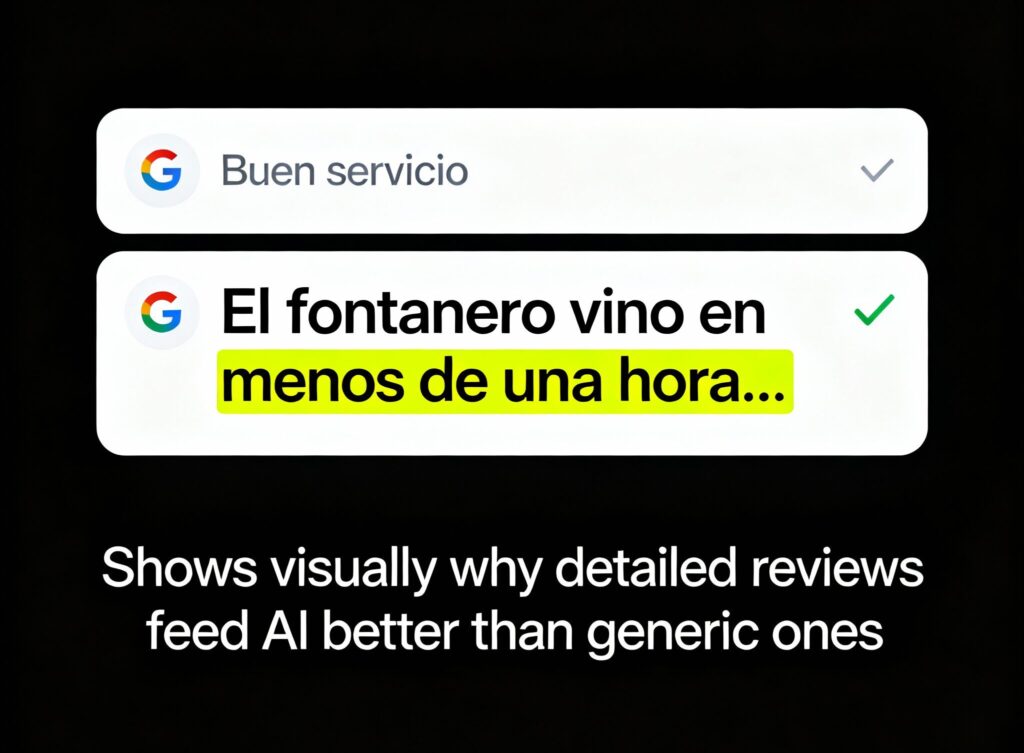
How to turn business reviews into SEO fuel?
- Ask for specifics: Encourage customers to mention the service, location, or problem solved.
- Instead of: “Excelente restaurante.”
- Better: “Excelente restaurante de tapas en el centro de Sevilla, abierto hasta tarde.”
- Reply with keywords naturally: Your responses are also indexed.
- Example reply: “Gracias, nos alegra que hayas disfrutado nuestras tapas en el barrio de Triana. ¡Te esperamos pronto!”
- Leverage reviews in content: Add snippets of customer feedback (with permission) on your site’s service pages.
- Example: “Nuestros clientes nos eligen porque llegamos rápido cuando hay fugas de agua.”
Mistake 7: Overlooking Video Content for Google Business Profile
Why does this matter?
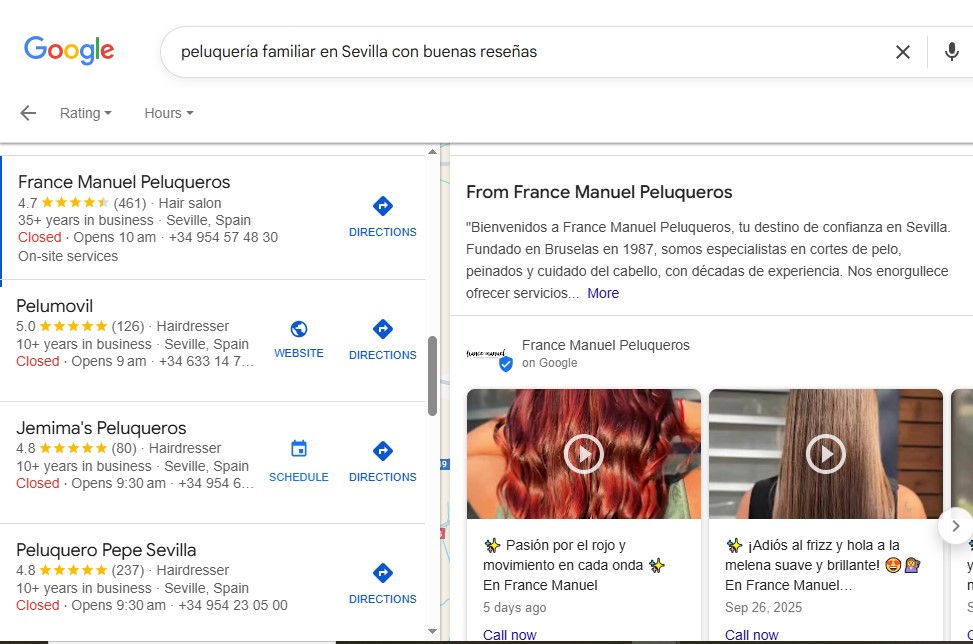
Video is one of the strongest trust signals for both customers and AI.A 20–30 second clip showing your bakery preparing fresh bread, your salon welcoming clients, or your hotel’s rooms and amenities provides Google with a clear, real-world context of your services.AI uses this content to associate your business with local searches like:- “panadería artesanal con obrador cerca de mí”
- “peluquería familiar en Sevilla con buenas reseñas”
What can you do?
- Upload short, natural videos (10–30 seconds) directly to your Google Business Profile.
- Capture real moments: staff at work, customer interactions (with permission), the environment, or your products in use.
- Add captions or brief text overlays in Spanish or Catalan, depending on your audience.
- Keeping recent videos, even one new video every few weeks, signals that your business is active.
Key Takeaways for Spanish Businesses this Year
- Today, AI-driven search and hyper-local queries determine which businesses gain visibility and which ones are overlooked.
- If you adapt now by optimizing for AI Overviews, writing in conversational Spanish & other regional languages, and publishing truly local content, you’ll not only appear in Google, but also in the AI tools your customers are already using daily.
In short, think beyond search engines. Think like AI.
The sooner you start feeding AI with the right signals, the easier it will be for your business to stand out in Barcelona, Madrid, Valencia, Sevilla, Bilbao, or even in a “small barrio”.FAQs Spanish Business Owners Usually Ask
1. Do I really still need a Google Business Profile in Spain?
Yes! It’s your foundation. However, now AI also considers your website, reviews, and local mentions. Your profile alone isn’t enough.
2. What counts as “local content”?
Anything that connects your business to your area. Short guides, FAQs, or posts about neighborhoods, landmarks, events, even little things like “Dónde desayunar en Gràcia”.
3. Should I write in Catalan, Basque, or Galician?
If your customers use those languages, yes. Even a few pages or FAQs in the local language can make a big difference.
4. Do reviews actually help for AI search?
Definitely, AI reads the content, not just the stars. Detailed reviews that mention services, locations, or problems solved help you get noticed.
5. Is local SEO in Spain different from other countries?
Yes. People search by neighborhood, plaza, or landmark. AI favors businesses that speak the same language and understand the same local context as your customers.