
LinkedIn has positioned itself as the go-to platform for professionals. However, when it comes to search a critical feature for discovery our experience as LinkedIn branding experts raises a significant question: Is it really relevant?
We’ve been testing, observing, and analyzing how LinkedIn search behaves across different profiles, industries, and keywords. What we found is surprising, if not frustrating.
1. Same Feed for Everyone
Try searching for “fintech” or any other keyword. The results appear identical regardless of who’s searching. For example, one of our team members saw this:
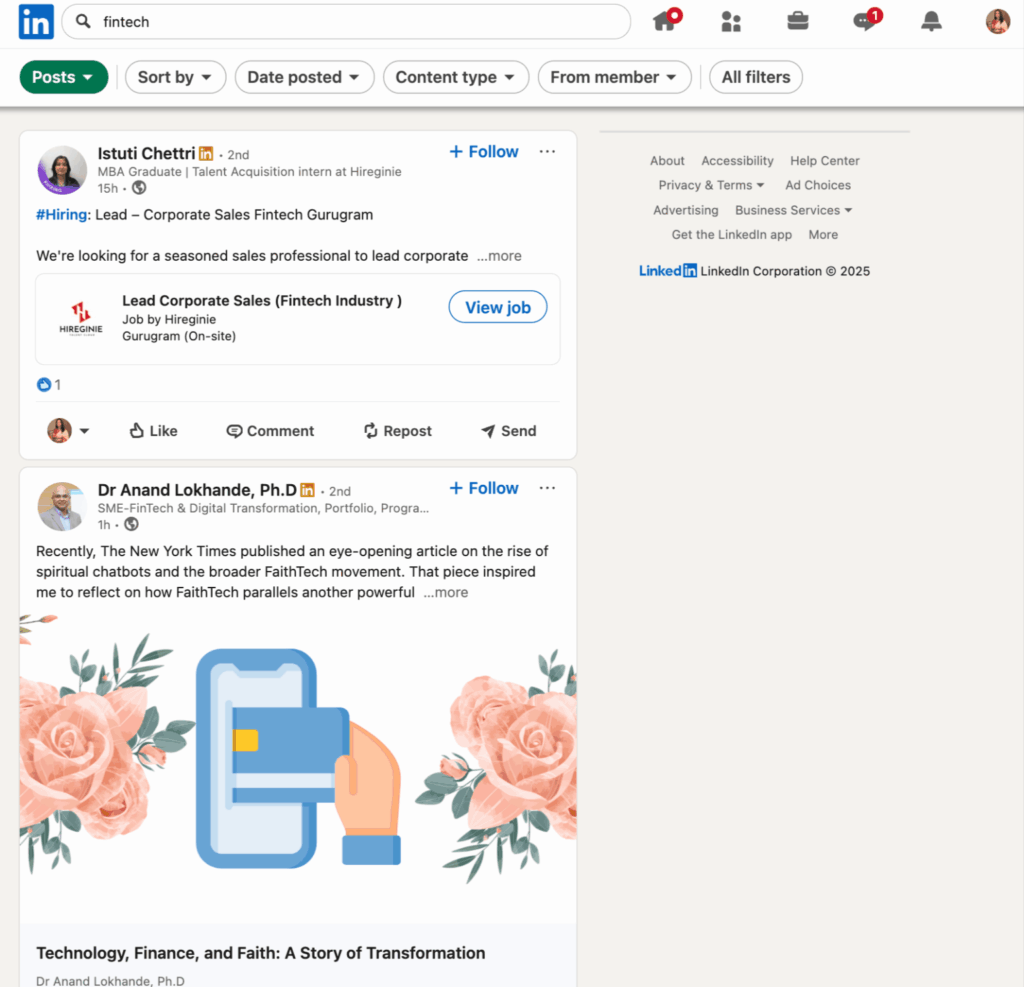
While another saw, this:
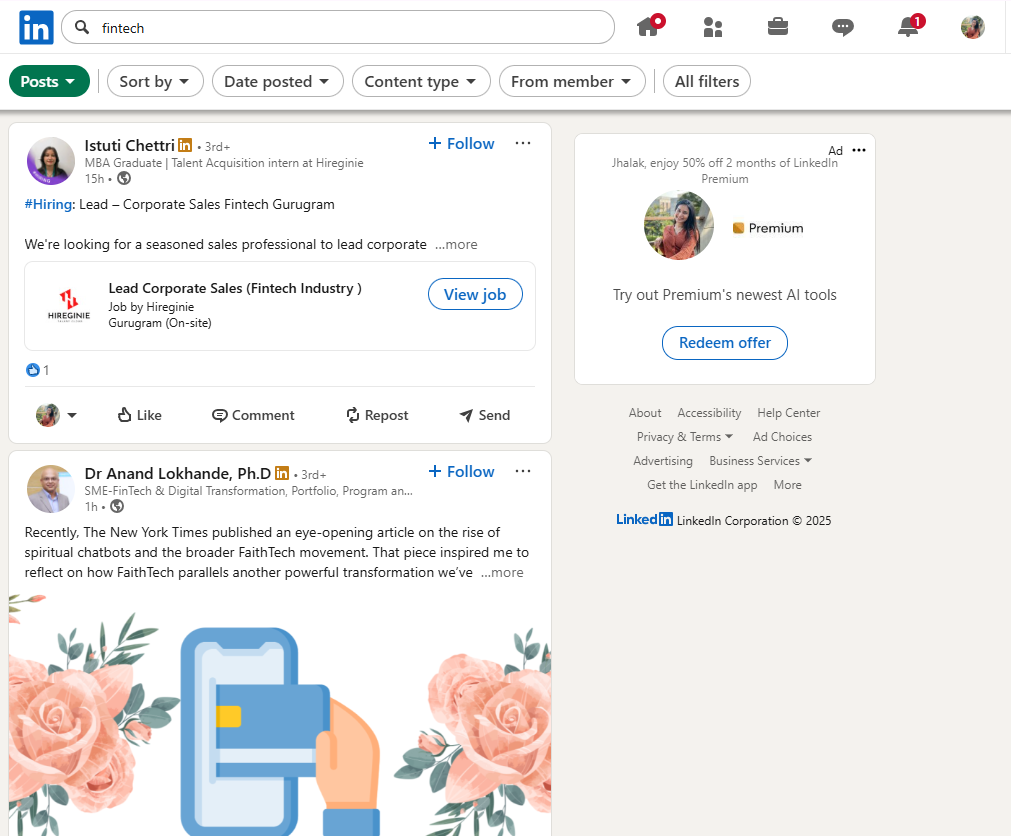
Whether you’re a fresher, founder, or industry veteran, the algorithm serves the same stale platter. Instead of tailoring results based on your network, expertise, or interactions, LinkedIn search feels like a copy-paste feed. This makes it less of a personalized discovery tool and more of a generic notice board.
2. Content is Basic, Not New
When you search, the posts and articles you see are usually the most surface-level definitions or outdated takes. Rarely do you discover cutting-edge insights, contrarian opinions, or in-depth discussions.
For a platform with millions of experts, LinkedIn’s search often fails to effectively spotlight expertise, it frequently recycles the basics.
3. Recency Doesn’t Matter
Unlike other platforms where recent content gets visibility, LinkedIn search doesn’t seem to reward freshness. Posts from months ago often appear above newer, more relevant discussions.
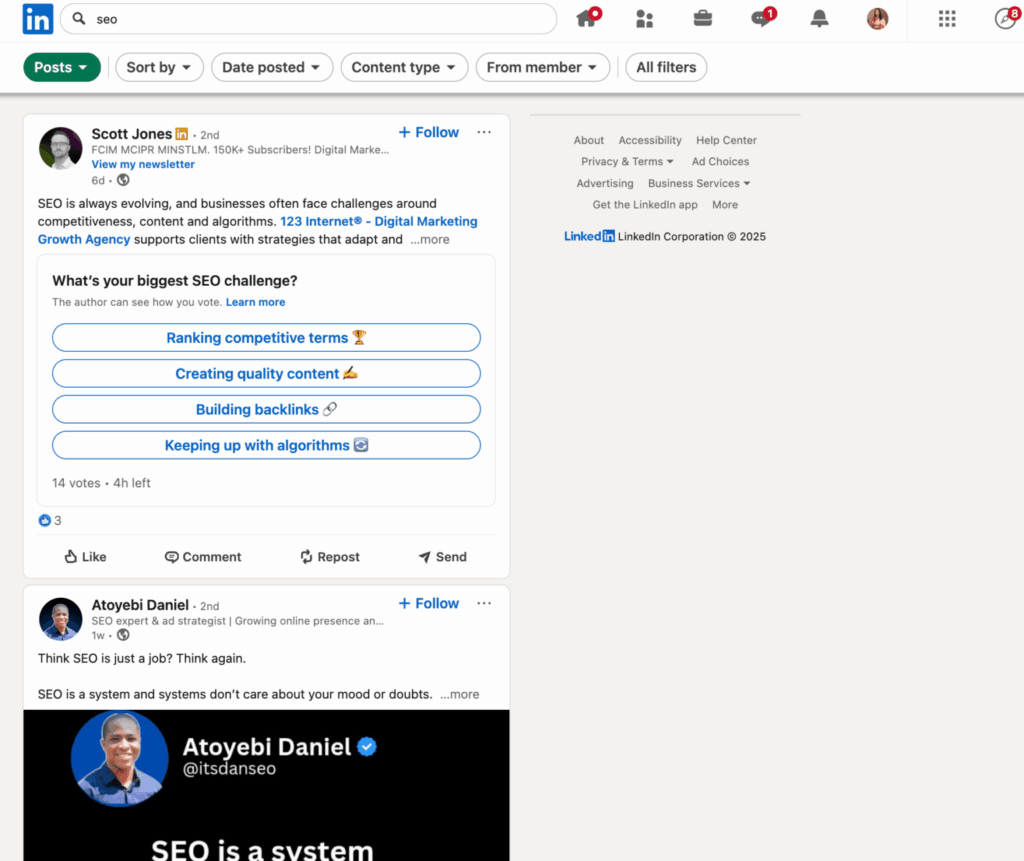
In industries such as AI, SaaS, or marketing, this lag renders the feature almost unusable.
4. Hashtags Are Optional (and Random)
We have been telling most of our customers that hashtags don’t work these days, but then they have questions about why their competitors are using them. And, we are like, “can’t competitors be wrong?”
While hashtags were meant to be the magic key to discovery, LinkedIn search doesn’t treat them that way. Whether you add them or not, your post can still show up—or not show up—seemingly at random.
For creators trying to be intentional about reach, this makes strategy guesswork.
5. Engagement on Posts in Search? Missing.
And here’s the biggest red flag: the posts that show up often have little to no engagement.
Imagine searching “AI strategy” and finding posts with 3 likes and 0 comments.
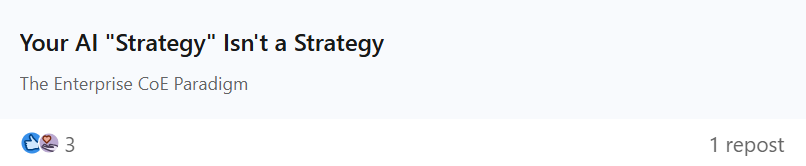
That hardly builds confidence in the value of what you’re seeing.

Discovery without credibility is noise. And LinkedIn search is becoming just that noise.
6. No Company or Personal Brands in Sight
Search is supposed to connect professionals with brands, thought leaders, and industry authorities.
But LinkedIn search often hides them. Instead of showing recognized company pages, verified experts, or strong personal brands, it fills results with scattered posts that lack authority.
For anyone researching a company or trying to evaluate an industry leader’s POV, the current search is almost useless. You don’t see the voices that actually shape industries instead you see generic, low-engagement posts.
That’s like Googling “Apple iPhone” and not finding Apple’s official page or Tim Cook’s thoughts.
If LinkedIn Search is Irrelevant, How Do You Stay Visible?
If the search function doesn’t highlight your expertise or brand, it doesn’t mean you’re invisible. It simply means you can’t rely solely on search.
Visibility on LinkedIn now comes from how you show up, not how you’re found.
Here’s what actually works:
1. Create Not-So-Usual Content
The feed is already flooded with textbook definitions and recycled takes. If you want to stand out, your content must break the pattern:
- Share observations and stories from your real work.
- Use formats others don’t—polls, carousels, even handwritten notes or behind-the-scenes snapshots.
- Offer contrarian angles or niche insights that make people stop scrolling.
The more “human and different” your content feels, the more likely your target audience will engage, even if they didn’t search for you.
2. Engage With Your Target Audience
Visibility doesn’t start with what you post; it starts with what you respond to. Commenting on, liking, or resharing posts from your prospects, peers, or industry voices puts you directly in their notifications and their network’s feeds.
- Comment with value, not just “Great post.”
- Ask follow-up questions that spark discussions.
- Tag people where relevant to extend reach authentically.
Think of this as walking into a networking event and joining the right conversations rather than waiting for people to come to your booth.
3. Post Regularly (But Not Too Often)
Consistency matters more than frequency. Posting every day without substance leads to fatigue, while posting once in three months kills momentum.
- Aim for a 2–3 posts per week rhythm that feels steady.
- Build a content bank so you’re not scrambling at the last minute.
- Keep a mix: personal stories, industry insights, and client experiences.
Regular posting builds trust: your audience begins to expect and look forward to hearing from you.
Final Word: Search Isn’t Visibility, But Strategy Is
LinkedIn search might be losing relevance, but that doesn’t mean your brand visibility should suffer. Professionals and companies who shift focus from being searchable to being seen—through distinct content, strategic engagement, and consistent presence end up winning.
Visibility is no longer about keywords. It’s about credibility.