
Key Takeaways
- Use buyer-intent keywords to target ready-to-buy customers.
- Build SEO-rich product pages with schema, meta, and ALT tags.
- Create content based on buyer journey stages.
- Set up Google Merchant Center for visual shopping visibility.
- Collaborate with influencers and distribute content across multiple channels.
You’ve built a brand. Your online store gets traffic. But SEO still isn’t driving results?
Whether you’ve started or are just exploring SEO, one thing’s clear – search matters, and without a clear SEO strategy that converts, you’re leaving revenue on the table.
Your buyers are already searching for “lab-grown diamond rings,” “gold jewelry for women,” or “diamond engagement rings.” If you’re not there, your competitors are.
Jewelry SEO isn’t about chasing keywords. It’s about aligning with how real people shop and turning search visibility into conversions.
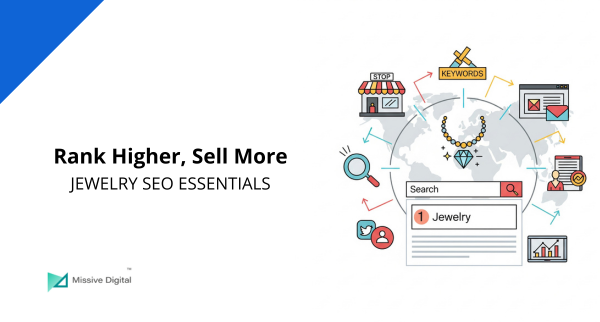
This guide will help you with the top strategies to make SEO a real growth channel.
What are the benefits of SEO for jewelry businesses?
SEO isn’t just a marketing channel. It is a long-term growth lever for jewelry brands.
When done right, it helps your online jewelry store earn trust, capture high-intent demand, and reduce acquisition costs, without relying solely on paid media.
1. Lasting Visibility
When your category and product pages rank, they consistently bring in qualified traffic day after day, eliminating the need for daily spend or campaign refreshes. That means your team gets compounding returns from work done once.
2. High-Intent Traffic
Buyers searching for “diamond engagement rings” or “lab-grown jewelry near me” may be ready to buy, or just starting to explore. Either way, showcasing your store in these moments puts your brand on their radar early, builds trust, and keeps you in the consideration set when it’s time to make a purchase.
3. Lower Acquisition Costs
While paid channels drive quick wins, jewelry SEO builds long-term efficiency and effectiveness. As your organic visibility grows, your team benefits from a steady stream of qualified traffic, reducing dependency on paid spend and lowering your overall cost per acquisition.
Let’s now look at the top SEO strategies for your jewelry business that will unlock the benefits we just covered.
Top SEO Strategies for Jewelry Brands
Your customers are searching for you. These steps will ensure they find you, alongside your competitors.
1. Define your brand positioning before you start SEO
Before you touch keywords or content, you need clarity on your brand’s positioning.
What makes your jewelry different from your competitors? Who are you speaking to – New generation brides, luxury buyers, sustainable shoppers, etc.
This isn’t fluff. It will help search engines (and buyers) understand what you stand for. Your brand voice, product focus, and values would shape how you approach every SEO decision, from category names to page content.
2. Get your website UX in place
SEO isn’t just about being found; it’s also about what happens once visitors land on your site. If your website isn’t easy to navigate or is not visually aligned with your brand, you’ll lose high-intent shoppers before they even start browsing on your jewelry website.
Design matters
Clean visuals, mobile responsiveness, fast load times, and a polished layout make a strong first impression and keep your high-intent visitors engaged.
Navigation matters more than you think
Shoppers should be able to find their required necklaces or lab-grown diamond ring options in just a few clicks. A clear structure with logical categories, filters, and internal links helps both users and search engines understand your site.
Strong UX turns browsers into visitors, and visitors into buyers.
3. Build your category and product pages around transactional keywords
If you’re not targeting what people are searching, you’re not capturing the demand. Transactional keywords are the terms genuine buyers use when actively searching for a specific product or type of jewelry.
Start with clear buying intent
Keywords like “lab-grown diamond engagement rings,” “14k gold chains,” or “waterproof everyday jewelry” signal buyers who are closer to making a decision. These phrases should form the foundation of your core product and collection pages.
Align your site structure with how your target audience searches.
Each primary product type, such as rings, earrings, necklaces, and bracelets, should have its own optimized category page. Go deeper with subcategories based on material, style, or occasion (e.g., “rose gold engagement rings” or “diamond bracelets for gifting”).
This approach ensures your jewelry online store is visible for the keywords that matter most, making it easy for both users and search engines to connect the dots between what you offer and what people are searching for.
4. Create a content strategy based on your buyer’s persona
Your ideal customers aren’t just searching for products; they’re also searching for answers, ideas, and inspiration. A strong content strategy helps you keep them engaged at every stage of their decision-making process.
Start with your actual buyers in mind
Are you speaking to newly engaged couples researching ‘how to choose the perfect ring?’ Or eco-conscious shoppers comparing ‘lab-grown vs. mined diamonds?’
Your content should address the questions and concerns your audience has at various points in their buying journey.
Match your content to how buyers make decisions.
Stage 1 – When they’re exploring
Focus on educational and inspirational content such as style guides, gifting ideas, or trending jewelry. This helps your potential buyers discover your brand and what sets you apart from others in the industry.
Stage 2 – When they’re evaluating options
Create meaningful comparisons, care guides, and “how to choose” content to establish trust and guide your potential customers closer to a decision.
Stage 3 – When they’re ready to buy
Ensure your content links directly to relevant product or collection pages and reinforces trust with quality, clarity, and brand authority.
When your content speaks to how jewelry buyers make decisions, it becomes more than informative. It becomes a catalyst for conversions.
5. Optimize content for Search Engines and AI-Powered Search
Creating content isn’t enough. It needs to be structured in a way that helps both search engines and AI-powered platforms understand, feature, and recommend it to potential customers who wish to buy jewelry.
Write for your ideal customers, structure for machines
Use clear headings and natural language to answer real customer questions, like “how to clean a diamond ring” or “what to gift for the 10th marriage anniversary.” This helps your content appear when buyers search on Google, any other search engines, or add a prompt in any AI tools.
Optimize your category pages for discovery
Category pages often rank higher than individual product pages and attract potential buyers earlier in their purchase journey.
Use descriptive titles like “Lab-Grown Diamond Rings” or “Gold Necklaces for Everyday Wear,” and include a short, relevant introduction that explains what the buyer can expect, along with internal links to your most essential product pages.
Craft intent-driven product titles and descriptions
Think like your customer. A title like “Elegant Ruby Necklace for Every Occasion” and a description like “Perfectly crafted for gifting and daily wear” speak both to search engines and your buyer’s intent, without sounding robotic.
Cover topics with depth and clarity
Don’t just touch on a topic. Explain it in a way that builds trust and provides honest answers to questions your potential customers are searching for.
Whether it’s helping someone choose between lab-grown or mined diamonds or explaining the benefits of lab-grown diamonds, your content should help them make an informed decision.
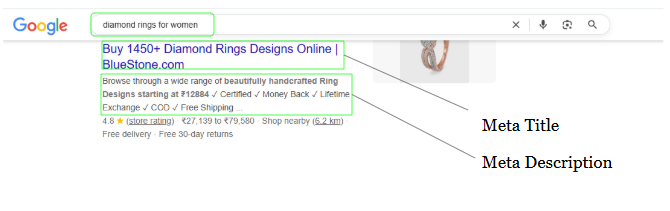
Write compelling meta titles and descriptions
Your meta title is your first impression in search results. Keep it clear, relevant, and focused on value, so it not only ranks but also drives clicks.
Use high-quality images with descriptive Image ALT text
High-quality visuals grab attention, but it’s the Image ALT text that boosts discoverability. Use phrases like “14k gold heart-shaped pendant necklace” to improve image SEO and discoverability.
Format to get featured
Use short paragraphs, bullet points, and clean formatting. This makes your content easier to read and more likely to be picked up in AI overviews.
Content that’s properly optimized and structured doesn’t just get seen. It gets clicked, remembered, and drives the required action from your potential jewelry customer. SEO today goes beyond Google — it’s about visibility across all AI platforms too. Learn more about how AI impacts jewelry search and SEO and what brands can do to adapt their content for better AI-driven discovery.
6. Initiate Setting up Google Merchant Center
Getting your jewelry seen on Google isn’t just about search rankings. It’s also about presence in the places where your potential shoppers actively browse, like Google Shopping, where popular products are placed based on the keywords. That’s where Google Merchant Center comes into the picture.
Why does it matter?
Google Merchant Center allows you to submit your product details, including name, pricing, and other specifications, so your products can appear in free product listings on Google Shopping, image search, and even on Google’s associated platforms like YouTube.
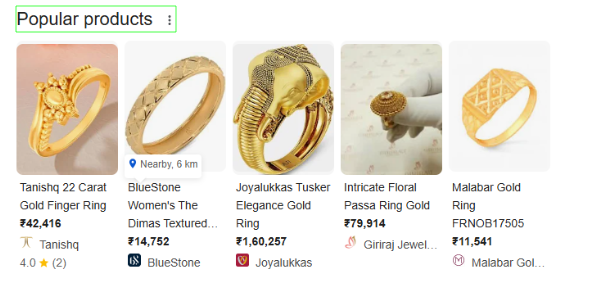
This expands your visibility beyond just your website and puts your products in front of high-intent buyers.
Start with a clean, verified product feed
Ensure that your titles, descriptions, and product data are accurate and aligned with your SEO efforts. Every listing should include the product type, brand, availability, price, and rich attributes such as material (e.g., 14k gold, lab-grown diamond, waterproof, etc.).
Link Merchant Center with Google Search Console and Google Ads
Even if you’re not running ads yet, connecting your Merchant Center account with Google Search Console & Ads helps unify your organic and paid visibility. It also unlocks more insights.
Maintain consistency across your store.
Product names, prices, and availability must match what’s on your website. Mismatches can lead to disapprovals and missed visibility opportunities.
Setting up Google Merchant Center helps your potential buyers find, explore, and consider your brand.
7. Optimize for Local visibility (If that’s your brand goal)
If you are running a jewelry brand with local stores or showrooms, local SEO is essential to ensure your nearby customers can search and visit your store, online and offline.
Start with a verified Google Business Profile
Claim and optimize your profile with accurate business details: name, address, phone number, hours, website, and high-quality images. Use keywords naturally in your business description, like “lab-grown diamond showroom in Los Angeles” or “custom engagement rings in New York.”
Encourage and manage customer reviews
Reviews and your timely response build trust and improve local rankings. Don’t hesitate to request reviews from your satisfied customers, and always respond, whether the feedback is good or not
Create location-specific pages (if applicable)
If you serve multiple cities or regions, create dedicated landing pages that speak directly to that audience. For example, “Wedding Jewelry in Miami” or “Custom Diamond Rings in Austin.”
This helps you rank locally and appear more relevant to nearby searches.
Local SEO connects your online visibility with real-world buying intent, bringing together foot traffic and local brand trust.
8. Involve influencers and execute PR activities right from the start
Jewelry SEO gives better results when supported by the right partnerships.
Collaborating with relevant influencers and media outlets can help your jewelry brand earn trusted backlinks, increase visibility, and establish a strong presence in search results.
Why does it matter?
When trusted voices in the jewelry or fashion space mention your brand or link to your site, it sends strong credibility signals to search engines. These signals add to your brand’s authority, enabling your store to rank higher and be more easily found.
Start with influencers your audience already follows
Collaborate with creators who align with your brand identity, whether that’s lifestyle bloggers, bridal wear influencers, or luxury fashion creators. Even one strong mention with a link to your product or collection page can improve visibility and drive referral traffic.
Leverage PR for high domain authority backlinks
Being featured in digital publications like Vogue, Brides, or Allure is excellent for branding and building strong domain authority. Press mentions that link to your site help you rank better and increase your visibility widely.
Choosing influencer marketing and PR early in your branding process complements your SEO strategy for a jewelry business. It strengthens your brand’s search presence more quickly than waiting for organic traction alone.
9. Go aggressive on content distribution, especially on channels like Reddit
Creating meaningful & purposeful content is great. However, you should have a brilliant plan in place to amplify it using various channels where your potential customers spend their time.
When used effectively, Reddit becomes your goldmine
Jewelry buyers often explore subreddits like r/EngagementRings, r/WeddingPlanning, or r/MaleFashionAdvice to research, get opinions, or discover new trends. Participate in relevant threads, share value-driven content, and avoid sounding promotional. Authenticity wins here.
Don’t stop at Reddit. Plan of a multi-channel strategy
Distribute your content across various channels, such as Pinterest, Quora, YouTube (if you have visual content), and niche jewelry or bridal communities. Repurpose blog posts into short social posts, quote cards, or reels to expand reach on platforms like Instagram and LinkedIn.
Add backlinks where natural
Wherever you share your content, make sure there’s a logical path back to your site, whether it’s a helpful blog, a collection page, or a downloadable style guide. These backlinks not only drive referral traffic but also support your jewelry SEO by building authority.
Distribution of your content is an ongoing SEO strategy to keep your content discoverable, shared, and driving results well beyond your website.
10. Collaborate with your Social Media Team. (Social content now ranks too, on Google page 1)
Social platforms should no longer be treated as brand awareness platforms. They must now be part of your search strategy.
Google has begun indexing content from platforms like Instagram, TikTok, and YouTube Shorts, meaning your social posts can appear on the first page of search results, sometimes even before your website does.
Why does this matter?
Your potential buyers might find your jewelry brand through a Reel or a product video before they ever land on your site. If your social content isn’t optimized with intent-driven keywords, you’re missing a significant opportunity to own those high-intent moments.
Use search-friendly language in your social content
Add relevant keywords to your captions, video titles, image and video content, and alt text.
Why?
Because when someone searches for “lab-grown engagement rings” or “gold jewelry for everyday wear” on Google, there are chances that Google will show your social media posts too.
By including relevant keywords in your social content, you increase the chances that your Instagram Reel, TikTok video, or Pinterest Pin will appear on Page 1, right when your potential customer is actively searching for inspiration or options.
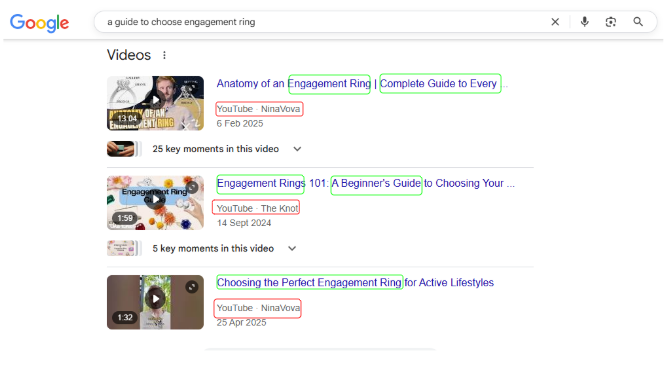
Today, social visibility contributes to search visibility. Publishing keyword-rich, well-structured, and intent-driven content across platforms makes your brand more discoverable, wherever your audience is searching.
11. Keep a close eye on your Tech SEO Health
Your content, keywords, and backlinks won’t give you the required results if search engines can’t properly crawl, understand, or index your website. That’s where technical SEO comes into the picture. It’s the foundation that keeps everything else working as it should.
Why does it matter?
Issues such as slow jewelry collection and product page speed, broken internal and external page links, duplicate content, or an unoptimized mobile experience can quietly hinder your visibility, regardless of how strong your content or products are. Technical SEO ensures your website is accessible, reliable, and search engine-friendly.
What to stay on top of?
- Page speed and mobile optimization – Your jewelry site must load quickly and provide a consistent experience across all devices, especially mobile.
- Clean site architecture – Keep your navigation structured and flat. Important pages should be reachable within 2-3 clicks.
- Crawlability and indexing – Use tools like Google Search Console to monitor errors, submit updated sitemaps, and ensure all key pages are indexed.
- Fix broken links and redirects – Regularly audit your site for 404 errors or improper redirects. Such errors can frustrate your users and confuse search engines.
- Secure your site (HTTPS) – Security is a trust signal and a ranking factor. Ensure your entire site operates over HTTPS.
Implement structured data – Help search engines better understand your product pages by using schema markup (e.g., product details, reviews, availability, etc.).
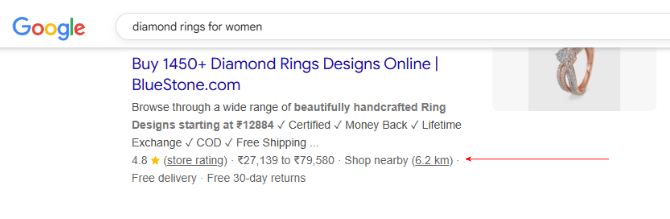
Regular technical audits are essential. Even the best content won’t perform for your online jewelry store if your site has technical issues that prevent search engines from crawling or indexing it properly.
12. Monitor your performance across Google and AI platforms.
SEO is not a one-time activity. Once your strategy gets underway, it’s crucial to continue tracking how your product and collection pages perform, not just on Google, but also on AI-powered search tools.
Why does it matter?
Your search rankings might look strong, but if potential buyers aren’t clicking, staying, or converting, something’s off. Monitoring helps you identify what’s working, spot missed opportunities, and fine-tune your jewelry website content accordingly.
What to track regularly?
- Google Search Console – Track indexing status, page visibility, and keyword performance across search results.
- Google Analytics 4 – Analyze bounce rates, time on page, user journeys, and much more to understand how buyers interact with your jewelry store and where they drop off.
- SERP and competitor movement – Utilize tools like SEMrush or Ahrefs to monitor your rankings and assess how competitors are performing for key product and category-level keywords.
- AI visibility – Monitor how your content appears in AI tools like ChatGPT, Gemini, or Perplexity. Being featured in these summaries means you’re influencing early buying decisions.
Monitoring performance is essential for staying proactive, not reactive. With the right insights, your team can keep refining what drives traffic, engagement, and conversions.
How does Missive Digital help you put this strategy into action?
At Missive Digital, we don’t just apply standard SEO tactics. We tailor strategies for how real people shop for jewelry online.
Every step in this guide is part of the framework we bring to life for ecommerce jewelry brands like yours. From category structure to content strategy, from technical audits to social visibility, we help your brand get better visibility on search engines and AI results.
Here’s how we work:
- We don’t rely on classic SEO templates
Every keyword plan, backlink strategy, and schema recommendation is tailored to your jewelry brand’s products, potential audience, and goals. - We blend data with storytelling
We create content that helps your products get discovered on search and gives buyers a reason to choose you. - We focus on results, not vanity metrics
Our job isn’t done with just search rankings. We examine traffic quality, engagement, and conversions, enabling you to connect SEO to revenue easily.
Final sparkle: Let your jewelry brand be found where it matters most
Great jewelry SEO ensures your brand is trusted, remembered, and chosen. It builds lasting visibility across search engines and AI results, drives high-intent traffic to your site, and helps turn clicks into conversions.
In the jewelry space, buyers don’t just want to browse; they want to be sure before making any purchase decisions.
Let your SEO reflect the value your brand delivers.