
In 2025, more than 83% of startup founders actively post on LinkedIn at least once a week. What started as a platform for professionals has quietly turned into a public boardroom where investors, customers, and future employees observe how a founder thinks, leads, and decides.
But not all visibility leads to value.
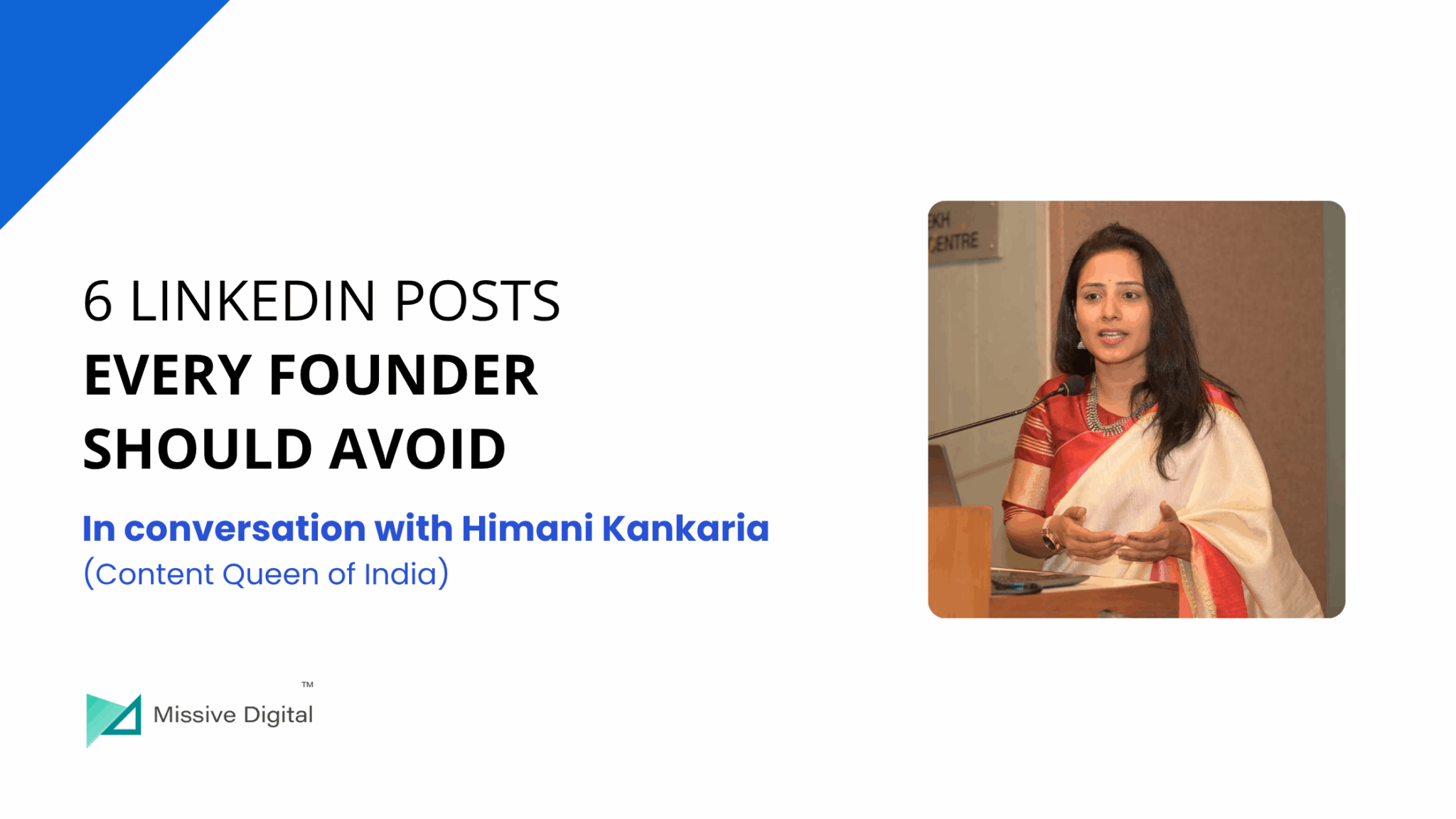
At Missive Digital, we recently sat down with our founder, Himani Kankaria, who herself is a personal brand and widely recognized as the “Content Queen of India.”

As an international speaker and trusted advisor to multiple startup and enterprise founders, she has helped leaders across industries turn their voices into lasting digital legacies.
In our conversation, we explored a question many founders rarely pause to ask:
What should they actually avoid posting on LinkedIn?
Himani shared that while more founders than ever are becoming active on the platform—some on the advice of investors, others nudged by their marketing teams, and many simply out of FOMO—this surge has led to a flood of unfocused content.
“LinkedIn is no longer just a professional network. It’s a mirror that reflects leadership clarity,” Himani said. “What you post doesn’t only tell your story; it defines how your ecosystem perceives your judgment and intent.”
Her observations and learnings come from 15+ years of helping herself and other founders craft narratives that not only build visibility but also credibility. And in this discussion, she breaks down the types of content founders should stop posting on LinkedIn—before their visibility starts costing them their authority.
6 Types of Content Founders Should Stop Posting on LinkedIn
According to Himani, “LinkedIn is not about being everywhere. It’s about being remembered for the right things.”
Her perspective comes from years of studying how founders communicate online and how small content decisions can shape public perception over time.
Below are the types of content she believes founders should pause and rethink before posting.
1. Travel Diaries Without a Thought
Scrolling through LinkedIn, it’s common to see founders posting photos from airports, summits, or beachside cafés with captions like “Quick break in Bali” or “Exploring Thailand before the next big quarter.”
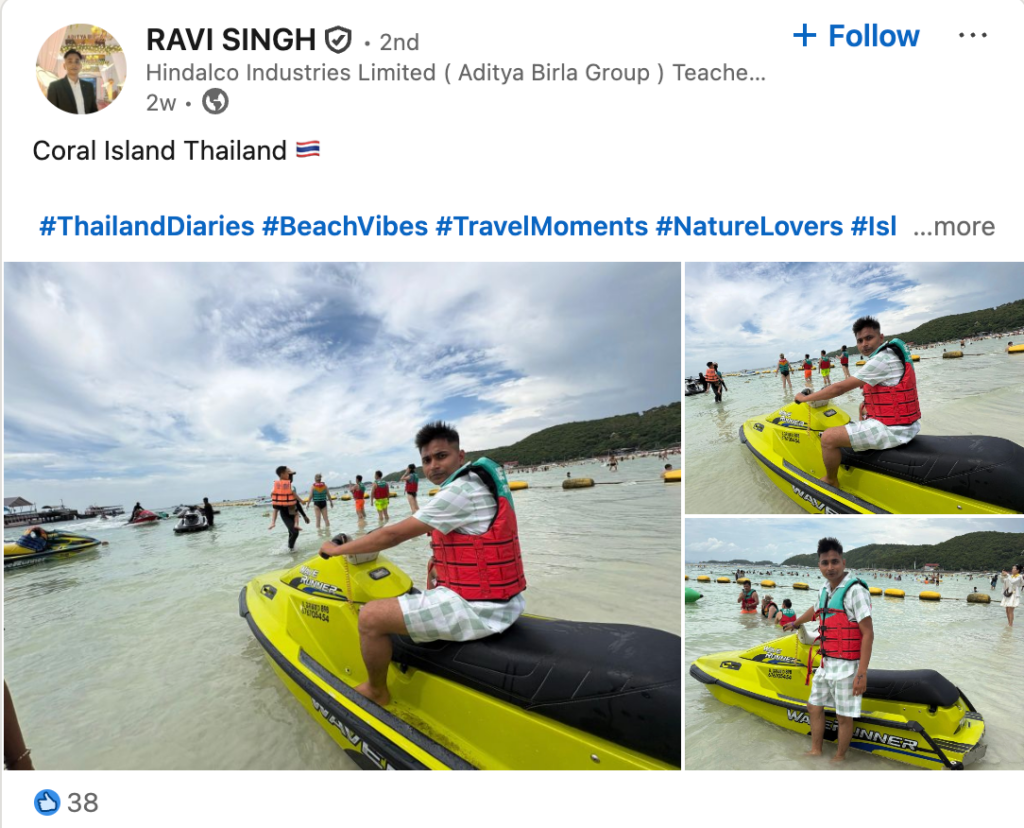
How to turn travel into a meaningful LinkedIn post?
- Link travel to leadership: Instead of “Recharging in Bali,” write “What solo travel taught me about making clearer decisions as a founder.”
- Share a takeaway, not an itinerary: Talk about a habit, cultural trait, or conversation that gave you a new idea.
- Add value to your audience: Ask yourself, “Would this insight help another founder make a smarter decision?”
- Use visuals with intent: A candid photo with context (not a selfie with a cocktail) can make your post feel grounded yet relatable.
Avoid the below things when crafting Travel-based LinkedIn posts:
- Sharing every travel update without tying it to your growth or business insight.
- Using generic captions like “Work hard, travel harder.”
- Overposting personal trips that add no professional depth.
2. Whatever AI Tools Recommend
AI has made it incredibly easy for founders to post on LinkedIn. With a few prompts, you can generate a catchy hook, a neatly structured paragraph, and a perfect closing line within seconds. It feels productive, but that is exactly where most founders lose their originality.“AI can help you sound polished, but it can’t help you sound real,” says Himani Kankaria. “The real skill is not in typing the right prompt. It lies in knowing which story is worth telling, when to tell it, and why.”The challenge with AI-generated posts is that they all start to look the same. The formats repeat. The tone blends. The outcome is a sea of “5 lessons I learned as a founder” or “Top 3 mistakes every entrepreneur should avoid.” These may appear well-written, but they often lack emotion, context, or authenticity.The audience today can tell when a post is written for the algorithm instead of from experience. Authenticity has always outperformed automation in the long run.How to use AI for LinkedIn Content the right way?
- Use AI for clarity, not creativity: Start with your own thoughts or story. Then let AI help you refine, not invent, your message.
- Ask the originality test: Before posting, ask yourself, “Could anyone else have written this?” If the answer is yes, rewrite it in your own language.
- Keep your voice intact: Preserve your natural writing rhythm and the words you would genuinely say in a conversation.
- Use AI for structure, not sentiment: Let it help you organize your thoughts, but the insights must come from you.
Avoid the below things when using AI for LinkedIn content
- Posting content entirely generated by AI without your input or review.
- Using generic prompts such as “Write a viral LinkedIn post about leadership.”
- Relying on AI templates that prioritize clicks over clarity.
3. Generic Entrepreneurship Tips
If there’s one type of content that clutters every founder’s feed, it’s the endless stream of “5 lessons I learned as an entrepreneur” or “Wake up early, stay focused, keep hustling” posts.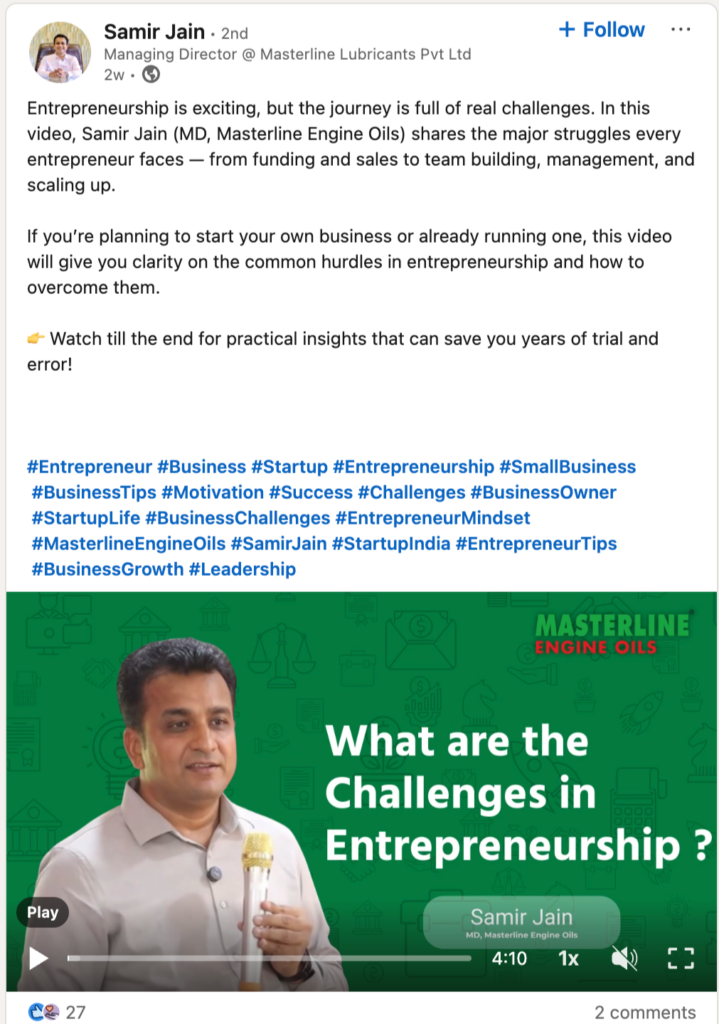
How to share entrepreneurial insights on LinkedIn that resonate?
- Tell the story behind the learning: Instead of saying “Persistence pays off,” explain when persistence mattered in your journey — perhaps when you waited six months for a client breakthrough or pivoted a product after three failed launches.
- Be specific: Replace “Never give up” with “We were rejected by 12 investors before one said yes, and here’s what I changed in my pitch each time.”
- Write for your peers, not your followers: Frame your content for founders, investors, or operators who’ll appreciate the nuance, not for a generic audience looking for inspiration.
- Make it actionable: Share one practical takeaway others can implement, not just a broad life lesson.
Avoid the below things when sharing entrepreneurial content on LinkedIn
- Copy-pasting quotes from famous entrepreneurs without adding your perspective.
- Posting motivational lines that could apply to anyone, anywhere.
- Writing advice posts that don’t reveal your journey, mistakes, or learnings.
4. Reposting Company Profile’s Sales Pitches
One of the most common mistakes founders make is using their personal LinkedIn profile as an extension of their company page. The intention is understandable. They want to amplify visibility for product launches, awards, or marketing campaigns. But the execution often feels transactional and detached from the founder’s voice.“Your LinkedIn profile is not your company brochure,” says Himani Kankaria. “People follow you to understand how you think, not to see what your marketing team already posts on the company page.” Reposting promotional content without context makes your profile look like an advertising feed. A founder’s post should add meaning that only they can bring: the story, the thought process, or the decision that shaped the outcome.At Missive Digital, we have observed this pattern across several clients. Engagement levels tend to drop significantly when founders repost company updates, even when they add short captions or thoughts. The algorithm deprioritizes reposts, and the audience perceives them as less personal.That does not mean you should never share company updates. Post them only when it is truly necessary.For example, a strategic milestone, funding announcement, or something deeply tied to your leadership. And when you do, do not expect high engagement. Measure value in credibility, not clicks.How to make company updates more founder-worthy on LinkedIn?
- Tell the story behind the news: Instead of reposting “We launched our new feature,” explain why it matters or what customer insight inspired it.
- Offer a founder’s perspective: Share what this milestone taught you about product thinking, leadership, or decision-making.
- Add a reflective tone: Mention what challenges the team faced or how you approached them.
- Connect it to your vision: Explain how this step fits into the larger journey of your company’s growth.
Avoid the below things when reposting the Company’s LinkedIn page posts
- Copy-pasting captions directly from your company page.
- Using your personal feed purely for sales or promotional posts.
- Posting company flyers or graphics without any narrative.
5. Jumping on Every Trend
Every week, a new trend takes over LinkedIn. From viral post templates to awareness days and breaking news, something is always demanding attention. Many founders join these conversations simply because others in their network are posting about them.“Trends can make your content visible for a day, but they rarely make your brand memorable,” says Himani Kankaria. “Founders should aim to lead conversations, not chase them.”A clear example of this surfaced when global discussions around Trump’s tariff decisions began dominating LinkedIn. Almost overnight, many IT founders started posting their opinions, echoing headlines and sentiments that were already circulating. Most of those posts neither offered a unique angle nor contributed anything new to the dialogue. They were created because everyone else was doing it.The result was predictable. Engagement dropped, and the posts vanished from visibility within hours. More importantly, they added no value to the founder’s professional narrative.If you do not have a distinctive perspective or relevant experience connected to the topic, there is no advantage in posting about it. Being quiet sometimes protects your credibility better than following the crowd.How to decide if a trend is worth joining for LinkedIn content?
- Check relevance: Ask if the topic connects with your company values, customer challenges, or leadership philosophy.
- Find your angle: Share an original point of view. For example, if you talk about tariffs, link it to how global policies impact your hiring or pricing strategy.
- Stay authentic: Use your own tone and avoid forced opinions that sound borrowed.
- Know when to stay silent: Posting nothing is better than posting something that feels unnecessary.
Avoid the below things when trying to choose trending topics for LinkedIn content:
- Jumping into trending hashtags or world events just to appear active.
- Copying post formats or opinions from other founders.
- Commenting on industries or issues that have no connection to your business.
6. Thought Dumps Without Context
Every founder has moments of sudden insight. Maybe during a meeting, a drive, or while reading a book. Many of these thoughts make their way straight to LinkedIn in the form of short, standalone statements like “Execution beats ideas” or “Culture eats strategy for breakfast.”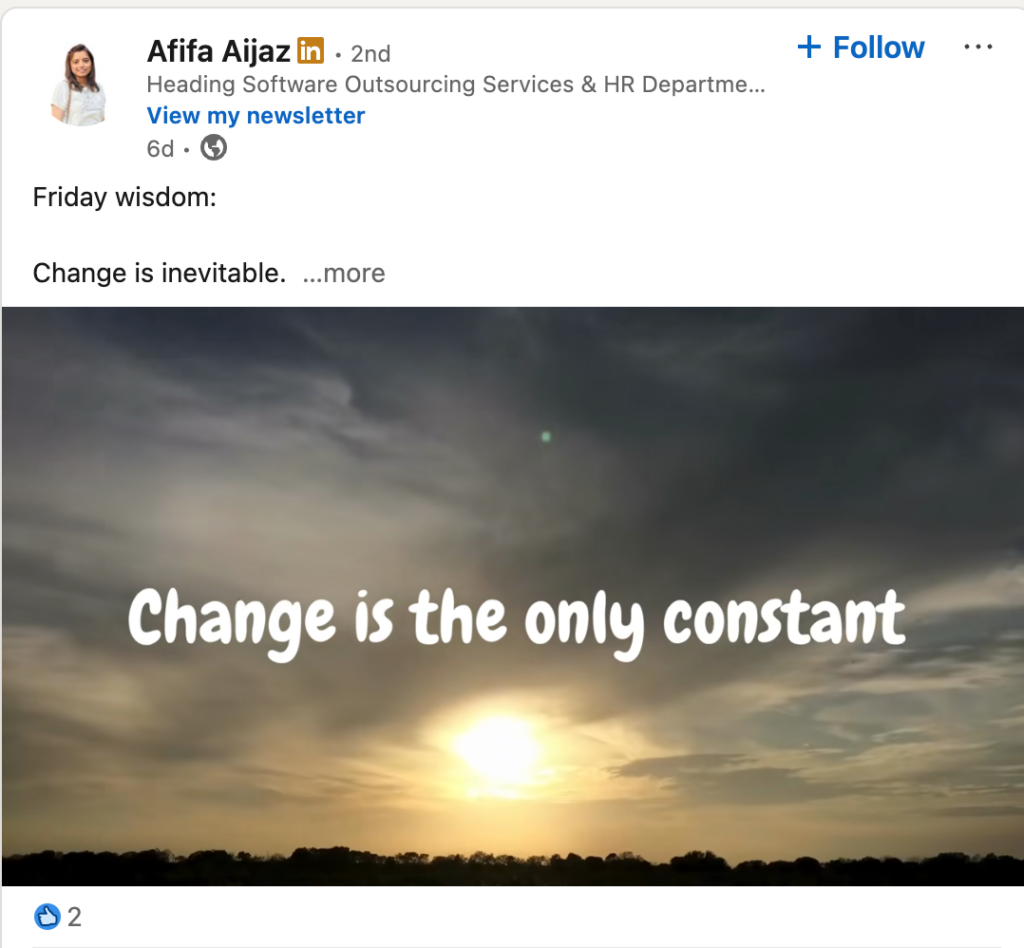
How to turn raw thoughts into valuable LinkedIn posts?
- Build a short story around the idea: Instead of “Execution beats ideas,” share when you realized it. For example, “In our early years, we spent months perfecting pitch decks instead of prototypes. Only when we started executing fast did our business model truly evolve.”
- Give it relevance: Tie your insight to a current situation, learning, or leadership decision. This helps your audience connect theory with reality.
- Show reflection, not reaction: A good post sounds like an observation you’ve lived, not something you just thought of.
- Add one actionable point: End your post with something your readers can take away or try in their own work.
Avoid the below things when trying to turn thoughts into LinkedIn content:
- Posting vague one-liners without explaining their origin or impact.
- Using philosophical statements that don’t connect to your journey.
- Treating LinkedIn like a personal journal of passing thoughts.
Conclusion: Be Present With Purpose
Lorem ipsum dolor sit amet, consectetur adipiscing elit. Ut elit tellus, luctLinkedIn has evolved into more than a professional platform. It is now a public reflection of how founders think, communicate, and lead. The content shared here becomes part of a founder’s digital legacy — shaping how investors, partners, and even future employees perceive them.
From travel diaries and AI-generated posts to company reposts, trend chasing, and thought dumps, many founders unknowingly dilute their credibility while trying to stay visible. The problem is rarely effort. It is clarity.us nec ullamcorper mattis, pulvinar dapibus leo.
“Visibility without intention is noise. But when every post has a reason, it builds both memory and meaning,” says Himani Kankaria.
Every founder has stories worth sharing. The difference lies in knowing which ones strengthen your reputation and which ones simply fill the feed.
A Quick LinkedIn Checklist by Missive Before You Hit Post
Ask yourself these questions before sharing your next LinkedIn update
Being consistent is easy.
Being intentional takes effort.
And as Himani often reminds founders at Missive Digital, “It is not about posting more. It is about being remembered for what you post.”