

I’ve seen this across agencies, in-house teams, and startups. Writers want space to think and tell stories that connect. SEOs want structure and results that perform. Both are right, yet they often move in parallel instead of together.
What makes it harder is that this gap is rarely discussed. Writers keep writing for employers or clients, but who really listens to them? Who understands what it feels like to turn a list of keywords and a tight deadline into something meaningful?
I’ve seen both sides, the pressure, the rewrites, the silence that grows between intent and impact. This piece isn’t about taking sides; it’s about giving voice to those who often stay unheard — the writers.
Disclaimer: None of this is about blaming SEO heads or glorifying writers. It’s about uncovering the small gaps we’ve all seen but rarely talk about so experienced teams can start working with each other, not around each other.
1. We are given titles & keywords and little to no narrative.
This is where every experienced writer’s frustration begins.
When all we get is a title like “Best ERP Solutions for Manufacturers” and a list of keywords, it feels like being asked to build a house without knowing who’s going to live in it. We can still write something neat and grammatically correct, but it’ll lack intent. It’ll look like content, not communication.
Writers deliver a decent draft, SEO heads come back saying “It’s not aligned with the intent,” and the cycle of rewrites begins. Not because the writing was bad, but because there was no shared understanding from the start.
Writers want to know:
- Who exactly are we speaking to: a CTO, a marketing head, or a mid-level manager?
- What’s the pain point we’re solving?
- Why are we writing this now? Is it a ranking gap, a sales enablement need, or a thought-leadership piece?
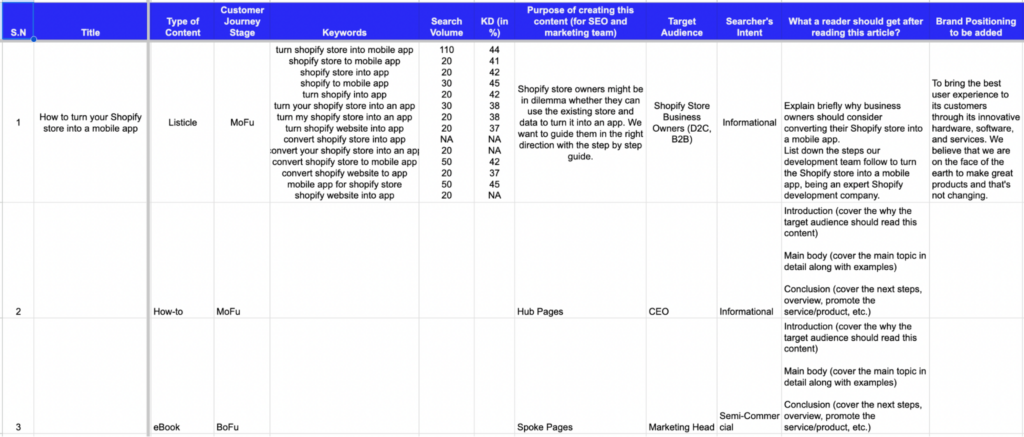
Here is a sample content calendar by Missive Digital that includes everything that a writer would need to know before writing:
Without that clarity, even strong writing becomes mechanical. You end up writing to fill space instead of shaping perspective.
The fix:
Give writers more than a title and a keyword list. Share the why behind the piece. Let them see the big picture like the audience, the funnel stage, and the content’s purpose.
Once writers have that narrative clarity, the same keywords start working harder.
That’s when content stops sounding optimized and starts sounding intentional.
2. We are not involved in strategic discussions (or do they have any?)
The SEO team plans a content sprint for the quarter. They finalize 40 topics, map keywords, and set deadlines. The writing team joins later only to hear, “We just need you to execute these.”
But no one explains why a particular topic matters to the audience, or how it ties to conversions or brand positioning.
This one hits differently because it’s not about missing information but about missing voice.
This one hits differently because it’s not about missing information but about missing voice.
It feels like being part of the engine but never the steering.
Based on my experience mentoring writers at various companies, I believe that writers, particularly senior ones, can add tremendous value at this stage by refining themes, identifying emotional hooks, and suggesting content formats that perform better.
But since they’re not in the room, all that potential is left unused. This is why a content-driven SEO agency often involves writers early in the planning process to align search demand with audience needs and business goals.
Also, most SEO teams don’t even brainstorm on the topics being finalized because the agenda is clear: create content with search volume and now, whatever the AI tools recommend.
The fix:
- Bring writers into the room early, not to write, but to think.
- Let them contribute when ideas are still raw.
- Because when writers understand strategy, they don’t just write faster; they write smarter.
The difference is subtle but powerful because then, the content shifts from compliance to contribution.
3. SEOs want us to focus on the number of content delivered vs the quality of content delivered
A writer gets a message in the team chat: “We need 10 blogs by Friday.”
No one talks about which ones really matter or which will actually perform — just the number.
That’s how most writers start losing connection with their craft. They stop thinking about what the audience needs and start thinking about how to hit the count. The work becomes a cycle of producing words that look right but don’t feel right.
When quantity takes the lead, quality quietly slips out of the room. You can see it in the thin research, the repeated phrases, and the generic tone that says nothing new. Eventually, everyone wonders why the traffic didn’t move even after publishing so much.
The fix:
- Stop counting content like inventory. Count outcomes instead.
- Ask which 3 pieces can create the most authority or drive the most engagement.
If SEO heads start measuring performance by impact instead of numbers, writers can finally focus on crafting pieces that stay relevant long after they’re published.
4. We are given tight deadlines, especially now with AI.
When an SEO head says, “AI can help you write faster, so let’s close this week’s 10 blogs,” they rarely see what happens on the other side.
Writers don’t just write. They spend hours making sense of incomplete briefs, researching niche topics, opening 15 tabs to cross-check data, and decoding what the keyword actually means in context. Add interviews, tone alignment, and revisions — and suddenly, that “simple” blog isn’t a two-hour task anymore.
What looks like a writing job is actually a sequence of micro-decisions:
- What angle to take
- How deep to go
- What examples make it real
- How to keep it engaging without losing SEO structure.
These things take time. AI can speed up outlining or summarizing, but it can’t decide what truly matters to the audience.
So when tight deadlines come with AI expectations, writers feel invisible. Their effort to think, to craft, to ensure credibility, none of that gets accounted for.
They end up rushing, compromising depth for delivery, and silently watching quality slip through the cracks.
The fix:
- Before assigning timelines, break the task into what AI can do and what human insight must handle.
- Give writers the time to think through the content, not just type it.
Because the time you save by rushing the writing is usually spent later on rework — fixing what could have been done right the first time.
5. We have SOPs that include keyword density. Do we really need that today?
If deadlines weren’t enough, writers also have a checklist that looks straight out of 2014.
After rushing to meet delivery targets, they open the SOP and see, “Maintain 1.5% keyword density, include exact phrase in H2, and repeat primary keyword twice in the first 100 words.”
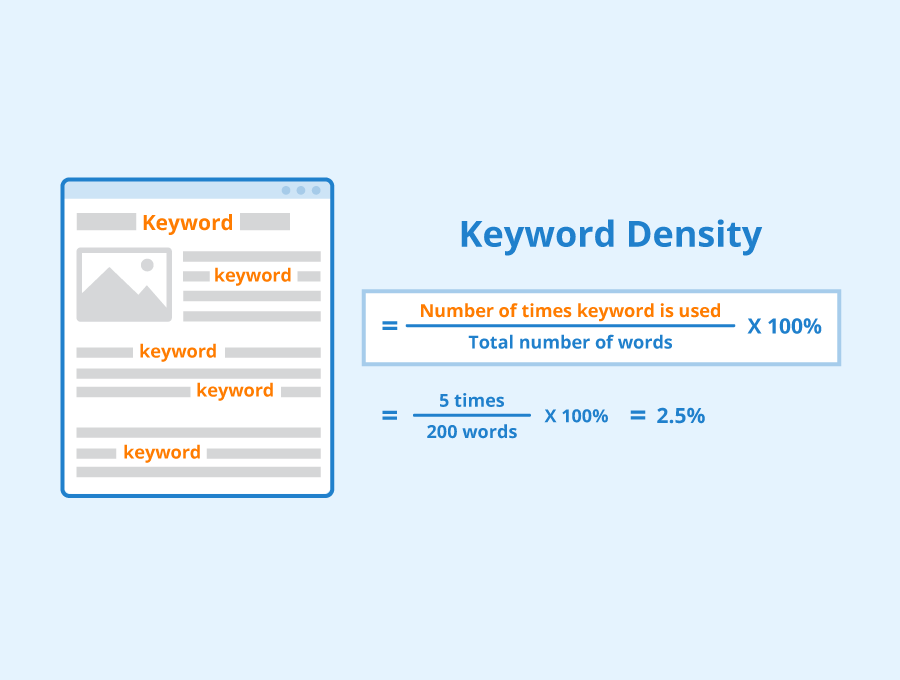
Source: Seobility
That’s where the sigh begins.
Writers know these rules were made to make content visible, but now they’re making it rigid. Google has evolved, but some SEO documents clearly haven’t. It’s not just frustrating; it’s creatively suffocating.
Writers end up stuffing the same phrase over and over, only to make the content sound robotic, and ironically, that’s precisely what today’s algorithms penalize.
Most SEO heads don’t see that keyword rules kill flow.
Writers spend more time counting keywords than crafting clarity. They lose the freedom to use synonyms, metaphors, or natural phrasing because the SOP says, “Repeat the keyword exactly.” The result? Content that ranks for a while but fails to resonate.
AI-driven search today rewards intent, not repetition. Google looks for topics, semantics, and context, not percentages. But outdated SOPs keep pulling writers backward.
The fix:
- Update the playbook. Let guidelines evolve with algorithms.
- Replace “keyword density” with “topic relevance” and “intent coverage.”
Permit writers to write like humans again, because when language sounds natural, both readers and search engines listen longer.
6. We have no room for creative experiments. We just have to follow what competitors have written.
It usually starts with good intent. The SEO head says, “Let’s analyze top-ranking competitors and create something better.”
But what that often translates to is, “Open the first five links on Google, merge what they’ve written, and reword it.”
Writers know this drill too well. The same headlines, same subtopics, and even the same examples. By the third article, you can almost predict what comes next. And that’s when the creative spark fades. You’re not writing anymore; you’re assembling.
The frustration isn’t just about repetition; it’s about being told to “play safe.”
Every time a writer suggests a new angle or format, it’s dismissed with, “But no one else has done that yet.” That line alone can crush creative confidence faster than any deadline ever could.
What many SEO heads don’t realize is that competitors’ content only shows what worked once, not what will work next.
And what if their target audience is different than ours?
What if they are mistaken in their approach to the content, and they just stand strong on page 1 because of the brand authority?
You won’t believe I had to write 11 ways to research content topics beyond competitors just because most of the time, I get ideas that someone has already written. To all the teams I mentor, I always mention that we should be the thought leaders of our industry. And thought leaders take the lead.
Writers see the patterns that readers are tired of. They notice when every article sounds like it’s written by the same AI bot in a different font. And they know that without new ideas, even great SEO eventually stops working.
The fix:
- Use competitor research as a mirror, not a mold.
- Let writers build beyond what exists because you will optimize it if it doesn’t rank on page 1. Let them experiment first to see if that works for your website.
Give them the freedom to experiment with tone, storytelling, and structure because creativity isn’t a risk in content but the only thing that keeps it alive.
7. We always get revisions, often more than a quick discussion, before drafting the content.
Every writer knows this loop — you write, it goes for review, and it comes back with a dozen comments. Then another round. And another.
What’s worse is when the feedback says, “This isn’t what we expected,” even though the brief never explained what was actually expected.
Most of these endless revisions don’t happen because the writing is weak; they happen because the foundation wasn’t clear. Writers are given keywords and a title, but no clarity on the narrative, audience mindset, or message tone. So everyone visualizes something different, and by the time feedback comes, it feels like you’re rewriting someone else’s imagination.
The mental fatigue here is real. Writers spend more time rewriting than writing, often trying to decode feedback that keeps shifting with every review cycle. It kills ownership. It’s hard to feel proud of your work when it has passed through too many invisible hands.
A single 15-minute discussion before drafting could save hours of rework later. Talking through the outline, examples, and expected tone can prevent multiple back-and-forths.
The fix:
- Have a short pre-draft sync before assigning every major piece.
- Clarify the goal, reader intent, and expected tone upfront.
It’s faster, lighter, and far more productive than running in circles later. Writers don’t need fewer revisions; they need clearer direction.
8. Our KPIs are the number of content ranked on page 1, and not whether people like or engage with our content.
This is one of the biggest disconnects between writers and SEOs today.
When success is measured only by how many blogs were published and how many ranked on page one, the entire purpose of content gets reduced to numbers on a dashboard.
Writers need to know the bigger picture, the kind of content that may not rank but still moves people, drives engagement, and creates unexpected wins.
For example, we recently published a blog for an Odoo Partner client at Missive Digital that didn’t reach page ONE, but we got a lead from Canada after the same piece was mentioned on ChatGPT. We found this in Microsoft Clarity, not Search Console.
So, should we say that the content didn’t perform?
It didn’t rank, but it reached the right person at the right time.
Metrics that actually reveal user behavior, such as scroll depth, engagement rate, click patterns, and average time spent per page, matter most.
Tools like MS Clarity and Hotjar literally show how users interact with your content. You can see where they stop reading, what captures their attention, and whether they’re engaging even if the blog isn’t on page one.
That’s where the real story lies.
Ranking tells you where you are on Google.
User behavior tells you what impact you created once you got there. Or even if you didn’t.
The fix:
- Redefine KPIs to include engagement, interaction, and influence.
- Use heatmaps and session recordings to understand what content resonates beyond rankings.
Because real content performance isn’t about visibility alone; it’s about value delivered.
Conclusion: It Was Never Content vs SEO. It Was Always About Alignment.
If you look closely, none of these frustrations is really about SEO. They’re about alignment. About how the process has become louder than the purpose.
Writers aren’t asking for freedom from structure; they’re asking for space within it. They don’t want to ignore keywords or deadlines; they just want to understand the story they’re contributing to. Because when they do, the same content that ranks also starts to resonate.
SEO heads, on the other hand, are under pressure too for traffic goals, lead targets, and algorithm shifts. But in chasing all of that, the human part of content often gets lost. And that’s where real collaboration breaks.
The truth is, content and SEO were never meant to compete. They complete each other.
One gives meaning, the other gives momentum.
So maybe the next time a brief is shared, it shouldn’t start with a keyword or a count. It should start with a conversation.
That’s where better content begins.